Houston Voters Approve Restrictions on Marijuana Arrests and a Ban on No-Knock Police Raids
· Reason
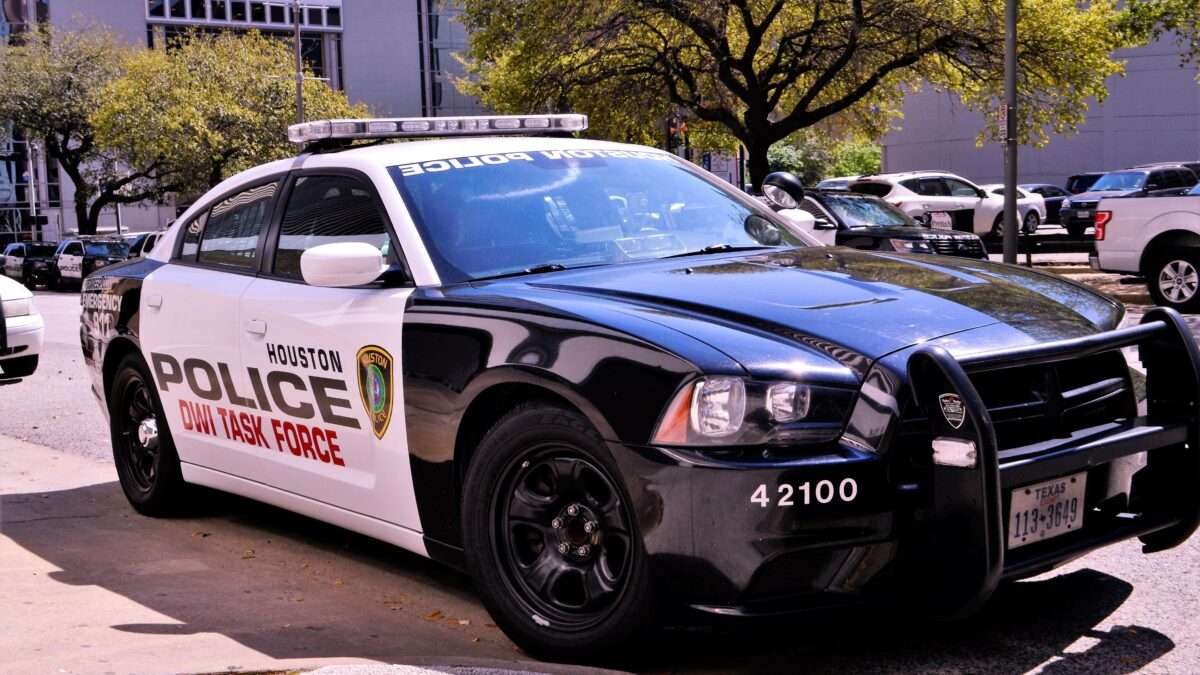
This week Houston voters overwhelmingly approved a ballot initiative that instructs local police to make marijuana misdemeanors their "lowest possible enforcement priority" and prohibits them from seeking or executing no-knock search warrants. The first provision might significantly reduce low-level marijuana arrests in Houston, which have risen dramatically in recent years. But the second one, although well-intentioned, is unlikely to make much difference in practice.
More than 70 percent of voters said yes to Proposition A, which requires the Houston Police Department (HPD) to deprioritize marijuana arrests involving possession of two ounces or less, a Class B misdemeanor punishable by a maximum $2,000 fine and up to six months in jail, or two to four ounces, a Class A misdemeanor punishable by a maximum $4,000 fine and up to a year in jail. The initiative, which amends the city charter, says "the City shall update its annual budget, police department manual, and relevant policies and procedures to ensure that public safety resources are not wasted on misdemeanor marijuana enforcement."
Visit umafrika.club for more information.
Although the HPD arrested just 10 people for marijuana misdemeanors in 2022, Houston Public Media reports, that number shot up in subsequent years, peaking at 538 in 2024 before falling to 426 in 2025. As of September, the number for this year was 232. From 2021 through 2025, 74 percent of marijuana arrests involved black people, who account for less than a quarter of Houston's population.
Proposition A requires the city to conduct an audit of arrests and citations during that period, including "demographic information for each person charged with an offense." The audit is also supposed to estimate the time and money spent on those cases.
Voters in Austin and Dallas have approved similar measures. But for a couple of reasons, they had little measurable impact.
By the time Austin voters passed their initiative in 2022, the city council had already restricted low-level marijuana arrests. In 2020, the Austin Police Department reported that possession arrests involving two ounces or less had fallen from 319 in 2017 to 54 in 2019 and dropped further in 2020, when police reported just three such arrests in the first quarter.
In Dallas, low-level marijuana arrests likewise declined before the ballot initiative passed in 2024. The Dallas Police Department implemented the measure in January 2025 by instructing officers to stop arresting people for simple possession of four ounces or less. But that July, the city agreed to stop enforcing the policy after a state appeals court ruled, in response to a lawsuit by Texas Attorney General Ken Paxton, that Austin's initiative was preempted by state law. Paxton had sued Dallas on the same grounds.
Assuming the Houston initiative does not suffer a similar fate, it should accelerate the downward trend in low-level marijuana arrests that began last year. But the ban on no-knock raids seems less promising.
The controversy over no-knock search warrants in Houston was driven largely by the January 2019 drug raid that killed a middle-aged couple, Dennis Tuttle and Rhogena Nicholas, whom veteran narcotics officer Gerald Goines had falsely implicated in drug dealing by describing a heroin purchase that never happened. That fiasco prompted a new HPD policy requiring officers to obtain high-level approval for no-knock warrant applications. And since then, the Houston Chronicle reports, no such warrants have been issued.
The details of the operation that killed Tuttle and Nicholas provide further reason to doubt that Proposition A's knock-and-announce rule will have a meaningful impact. After breaking through the front door around 5 p.m. without warning, police immediately shot the couple's dog. At that point, Nicholas was sitting on a couch in the living room, where she had been watching TV. Tuttle, who had been napping in a bedroom, responded to the tumult and gunfire by grabbing a revolver and firing at the intruders. By the time the shooting stopped, Tuttle and Nicholas were dead, and four officers, including Goines, were grievously wounded, mostly by friendly fire.
After Goines' lies were revealed, he was convicted of felony murder and sentenced to 60 years in state prison. During his trial, the prosecution argued that Tuttle did not realize the intruders were cops and reacted as "any normal person" would to a violent home invasion. But it is not clear that the outcome would have been any different if the cops had knocked, announced themselves, and waited "at least 15 seconds" before entering, as Proposition A requires.
Perhaps Nicholas would have heard the cops, digested what was happening, restrained the dog, and managed to open the door within 15 seconds. But if not, the cops still would have broken in and opened fire, and Tuttle still would have responded the same way.
Something similar happened when Louisville police officers killed Breonna Taylor during an early-morning drug raid in March 2020. In that case, which likewise involved dubious drug-trafficking allegations, the cops also had a no-knock warrant. They nevertheless banged on the door for at least 30 seconds, and they claimed that they also identified themselves as police officers.
All but one of Taylor's neighbors said they heard no such announcement. Taylor's boyfriend, who was in bed with her at the time, likewise said he did not know that the men who broke into the apartment were police officers. Like Tuttle, he grabbed a gun, which he fired once, prompting the hail of bullets that killed Taylor, who was unarmed and standing near him in a dark hallway.
The 15-second requirement imposed by Proposition A clearly would not have saved Taylor. Nor would it make a difference in other cases where police enter homes in the middle of the night, a practice that invites potentially deadly confusion. Since a knock-and-announce rule works only when people can reasonably be expected to hear, comprehend, and promptly respond, it is unlikely to have an impact without restrictions on the timing of police raids and a presumption against the "dynamic entry" tactics that cops tend to use when they execute drug warrants.
Whatever such reforms might accomplish, they do not address the fundamental problem, which stems from the decision to criminalize peaceful transactions between consenting adults. When politicians authorize police to invade people's homes in the hope of discovering arbitrarily prohibited intoxicants, they should not be surprised by the ensuing violence.
The post Houston Voters Approve Restrictions on Marijuana Arrests and a Ban on No-Knock Police Raids appeared first on Reason Magazine.