Colombia’s President Wants US Boots on the Ground
· Jacobin
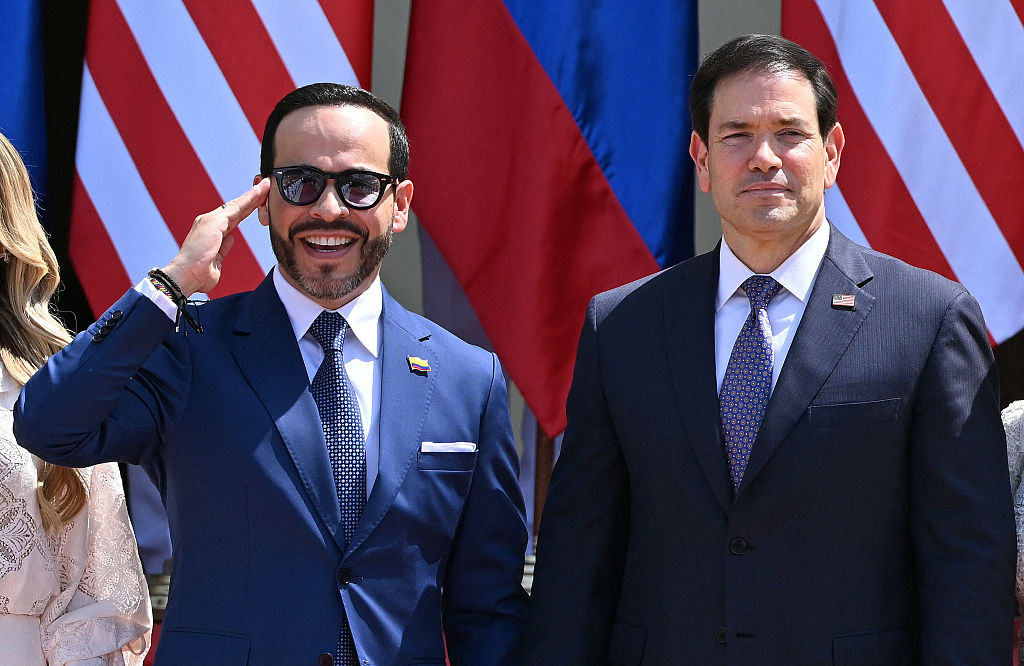
In the ten weeks since multimillionaire lawyer Abelardo de la Espriella was inaugurated as Colombia’s president, the country has undergone a significant political shift with respect to asserting its national sovereignty, with Colombia returning to — and potentially deepening — its subordinate position vis-à-vis the United States.Less than a week after the change of government in Colombia, US Secretary of Defense Pete Hegseth announced a major shift in US-Colombian military cooperation, stating at a press conference that de la Espriella had approved an agreement for joint operations in Colombia. US Southern Command (SOUTHCOM) commander General Francis Donovan had met with Colombia’s highest-ranking military officials by the end of the month to begin planning those joint operations against armed groups. There have since been reports — some confirmed directly by the Colombian government and US Southern Command — of US military personnel and aircraft operating in Colombia.The prospect of a renewed US military presence has provoked alarm among significant sections of Colombian society, particularly on the Left, which has a long tradition of opposition to US interventionism in the region. De la Espriella’s policy has therefore faced growing scrutiny and opposition. Opposition leader Iván Cepeda has submitted a formal complaint to the Colombian courts, arguing that the president’s actions concerning the joint military operations have violated the political rights of Colombians.Return of the Iron FistUS military presence has been justified primarily through the language of defense and security, one that obscures underlying strategic interests. Colombia is not only a key regional ally but an important source of natural resources, including oil and coal.US imperialism in Colombia was challenged, albeit unevenly, by Gustavo Petro’s progressive administration, particularly in its approach to US military involvement and the resolution of Colombia’s armed conflict. Through what it termed Total Peace, Petro’s government sought to move away from the US-backed militarist approach toward negotiated solutions with the country’s various armed groups. However, these efforts faced significant limitations, both due to the progressive government’s shortcomings in implementing its peace agenda as well as the pressure exerted by powerful factions of Colombia’s traditional ruling class. The resulting setbacks helped pave the way for this renewed militarist offensive, bringing Colombia closer to the very approach that has historically underpinned US involvement in the country.The significance of the latest developments is not simply that Colombia is returning to closer military cooperation with the United States. After all, Bogotá has maintained close military ties with Washington since the mid-twentieth century. What is different, and particularly significant from the perspective of Colombian sovereignty, is the apparent willingness of the new government to permit direct US military operations on its territory. More importantly, lacking coalitional power and the clientelist networks of traditional parties, de la Espriella has not sought approval from the Senate for such operations — approval that, according to the Colombian Constitution, is required for even the transit of foreign troops in the country.What Makes This Different From Past US Interventions?Colombia has long been one of the United States’ closest military partners in Latin America. For decades, Washington has provided the country with more US Department of Defense training and equipment than any other country in the region while embedding US advisers within its military and security institutions. This relationship dates back at least to 1949, when the United States established formal army and air force missions in Colombia.The relationship, however, has not always been limited to training and advice. From the 1950s, US military assistance became common to Colombia’s counterinsurgency campaigns. Although Washington and Bogotá have maintained that the historical US military assistance to Colombia is about regional security and the fight against criminal groups, it has always been deeply linked to the persecution of left-wing political leaders and movements.One of the first joint operations was the infamous 1955 military offensive against insurgent peasants in Villarrica, in which the Colombian Air Force used US-supplied aircraft in bombing operations. The United States also supplied several military advisers to the operation, which was high in casualties and displaced at least one hundred thousand peasants.The extent of US involvement subsequently deepened. Signed in 2000, Plan Colombia expanded Washington’s military assistance to the Andean country on an unprecedented scale. Its official emphasis was counter-narcotics, although US assistance also became deeply intertwined with Colombia’s counterinsurgency campaign against guerrilla organizations. US support included military equipment, training, intelligence, and institutional assistance. At the same time, however, US law explicitly prohibited military personnel and civilian contractors from participating directly in combat operations.That distinction became increasingly blurred in practice. From the late 1990s, US intelligence and targeting capabilities were deeply integrated into Colombian military operations, including from US special operations personnel. Nevertheless, at least formally, the model remained one in which Colombian forces conducted the combat operations and the United States provided intelligence and logistical support.What is novel about the developments since August 7 is the erosion of this historical distinction. The question is not whether the United States has intervened militarily in Colombia prior to today; that much is clear. What we seem to be moving toward is even more direct involvement: US forces operating alongside local troops in operations on Colombian soil.US Troops on the GroundThere is at least one instance in which the presence of US military aircraft and troops have been confirmed without the constitutional approval of the Senate. In late August, three US Marine Corps Venom helicopters and US troops entered Colombian airspace, specifically deployed to the port city of Tumaco on the Pacific Coast. The US Southern Command itself published pictures of the incursion, calling it an “operational site survey” and part of a broader deployment “by US military forces within their area of responsibility, in support of the Western Hemisphere Joint Task Force.” According to US officials, they are operating in the country to combat the narcotics trade and armed groups considered a threat to the United States and its allies.As part of the mission, General Donovan, commander of the US Southern Command, met with Colombia’s highest-ranking officers. According to reports from Colombia, the aircraft and their military personnel transported Donovan to his meetings in Colombia and then also transported the general and his Colombian counterparts to a meeting in Ecuador and back. That is to say, the incursion by the US military into Colombian territory was with the evident consent and authorization of the Colombian government. Colombia’s Minister of Defense, Jorge Eduardo Mora, who met with Donovan during the visit, subsequently stated that the “visit reaffirms the commitment to continue working together against narcoterrorists, the cartels, and all criminal organizations that seek to sow violence.”Studies have found that militarized counter-narcotics policies in Colombia often fail to achieve lasting reductions in coca cultivation while displacing production into new areas, exacerbating armed conflicts and endangering rural and Afro-Colombian communities.But the strategic significance of the US military presence on Colombia’s southern Pacific coast extends beyond counter-narcotics. Tumaco is a commercial port and the Pacific terminal of the Trans-Andean oil pipeline, linking Colombia to Ecuador’s oil infrastructure. Its role in energy and commodity trade, alongside growing US involvement in Colombian-Ecuadorian security cooperation, highlights the region’s broader economic and geopolitical importance.Another important report, details of which are yet to be confirmed, is of an operation that took place in Catatumbo, northeastern Colombia, on September 15. The Colombian Armed Forces undertook a mission to rescue eight hostages held by the Ejército de Liberación Nacional (ELN) one of the major guerrilla groups that remain in operation in the country. De la Espriella and the army’s official announcement failed to mention US involvement, but Colonel Fabio Ojeda, director of one of the Colombian units involved, subsequently stated that SOUTHCOM had participated in the operation. Reports suggest that US involvement entailed the use of drones, though the details remain unclear.Considering the announcements and the fast pace with which the US military is becoming more deeply enmeshed in Colombia, government officials appear to be heading toward an agreement like that seen in Ecuador under far-right Washington ally Daniel Noboa, in power since 2023. As reported recently, US military presence in Ecuador now involves on-the-ground heavily armed US personnel taking part in counter-narcotics operations.What About Congress?In Ecuador, President Noboa’s administration has found a more straightforward loophole with which to bypass the constitutional restrictions on foreign military presence. Ecuador’s government argues that the operations US Army personnel have taken part in are temporary and therefore do not breach constitutional restrictions, which focus on more permanent installations or the use of the country’s military bases.Colombia’s Constitution, Article 173(4), is somewhat more precise, specifying that Senate approval must be sought for foreign troops to transit within its borders. As well as more generally denouncing the announcement made by Hegseth on the new military cooperation agreement, Colombia’s opposition leaders have reacted with dismay at the unauthorized presence of US military aircraft and troops. Opposition leader Iván Cepeda, who lost the presidential election to de la Espriella by two hundred thousand votes, announced a constitutional protection action (tutela) against the government over the presence of the US military in Tumaco.Cepeda’s legal action against the de la Espriella government is only the latest and most prominent in a line of similar formal actions taken by the opposition, particularly representatives of his Pacto Histórico party. Walter Aguirre and Congressman Erick Velasco have both submitted similar legal actions. Moreover, Velasco recently took the government to court after the Defense and Foreign Affairs offices failed to respond to an information request concerning the matter. On September 21, the judge ruled in favor of Velasco and ordered Defense Minister Jorge Mora to respond within forty-eight hours. Mora and the government have yet to respond to the request.Plan Colombia 2.0?When Plan Colombia was first implemented, Colombia’s left-wing opposition had nothing like the representation it has in Congress today. The Pacto Histórico, despite losing the presidential election to de la Espriella, remains the largest political force in the country’s legislature. Without the political dominance that the Right enjoyed during the years of Plan Colombia, de la Espriella’s government is now confronting a legislature in which its opponents have both the numbers and the constitutional mechanisms to challenge executive power.This is what makes the current dispute over US military involvement so consequential. The legal challenges brought by Cepeda, Velasco, and others may appear limited in the face of an administration determined to press ahead with its security agenda. But they are testing something larger than the legality of any single operation. They are testing whether Colombia’s constitutional institutions can impose meaningful limits on the executive when foreign military power is involved.Importantly, it is the wider public — grassroots movements, anti-imperialist groups, and the millions who voted for the Pacto Histórico — that empowers political representatives like Cepeda to oppose this form of foreign interference. De la Espriella’s administration will therefore face opposition not only from representatives in Congress and the Senate but also from a broader popular movement with a long history of mobilizing against threats to Colombian sovereignty.In anticipation of popular mobilizations against these and other policies pursued through undemocratic means, the government has approved a decree granting police additional powers to restrict “violent protests.” The term is defined so broadly that it includes “disruptions to critical infrastructure,” leaving considerable scope for the repression of dissent.The opposition’s legal challenges will help determine what Colombia’s constitutional restrictions on foreign military intervention actually mean in practice, and whether the country’s institutional checks on executive power can hold under a government willing to push them to their limit. Should those limits be breached, the response will not be confined to the courts or the halls of Congress. Colombia has a long history of popular resistance to foreign interference, and any attempt to undermine its sovereignty will likely meet its strongest opposition in the streets, where the defense of national self-determination has so often been fought.This article originally appeared in Jacobin, a democratic socialist magazine publishing long-form essays and analysis on politics, economics, and culture. Subscribe to the print edition for $20 a year.
Visit turconews.click for more information.