In Spain, the Indignados’ Parties Are Dwindling Fast
· Jacobin
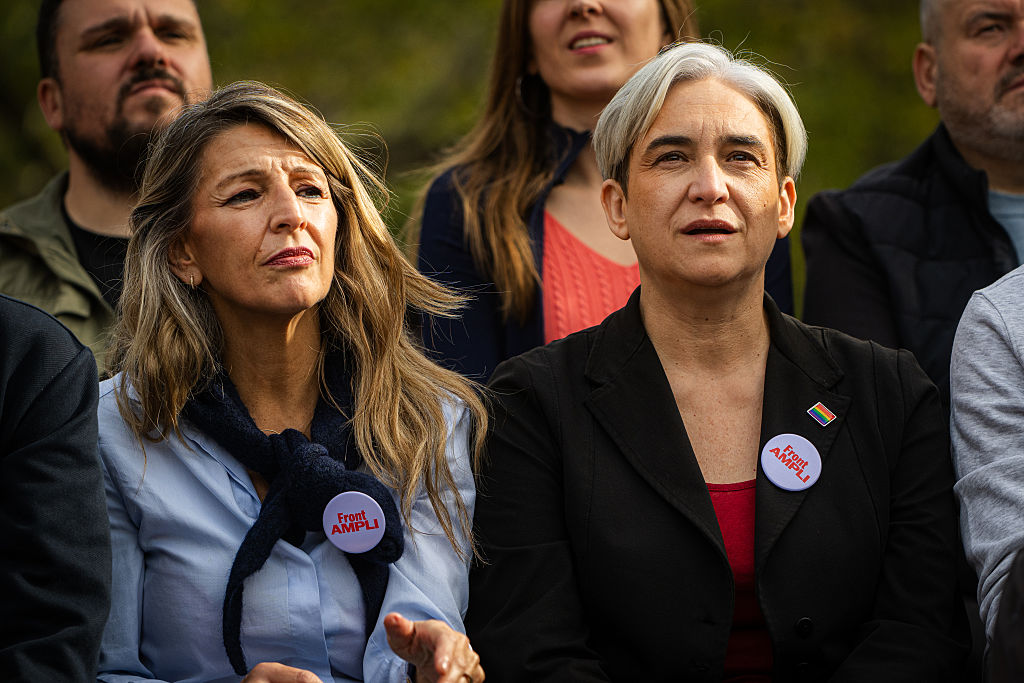
On September 23, Maricarmen Abascal was carried on a stretcher out of her apartment in the Retiro district of Madrid, where she’d been living since 1956. She was eighty-seven, disabled, and had limited mobility. Neighbors and members of the Madrid Tenants’ Union had formed a human chain to stop the eviction. This time, the police broke through it. As she was carried out, the crowd shouted that she was not alone. Two weeks later, she died in a hospital, before she could return to her home, under an agreement with her corporate landlords that arrived far too late.Her case set off a massive wave of mobilization led by a confederation of tenants’ unions. On September 26, marches under the slogan “Not One More Maricarmen” filled the streets of some forty towns and cities. In Madrid, protesters pitched hundreds of tents in the iconic Puerta del Sol, the public square that the anti-austerity Indignados occupied in 2011, and encampments soon spread across Spain. But on October 2, after Pedro Sánchez’s center-left government proposed two emergency housing decrees, the conservative Partido Popular, the far-right Vox, and the right-wing Catalan-nationalist Junts joined forces to block the measures. Sánchez, who represents the Partido Socialista Obrero Español (PSOE), responded by calling snap elections for November 29, this Sunday. With parliament dissolved, its standing committee revived the main decree by a single vote, extending the ban on evicting vulnerable households through 2030.Pressure has been building in Spain’s housing system for two decades. In 2006, at the height of a speculative bubble, the V de Vivienda (“V for Housing”) movement summed up a generation’s prospects in its blunt slogan: “You’re not going to have a house your whole f — ing life.” After the bubble burst in 2008, dragging the economy down with it, some of its more prominent activists founded the Mortgage Victims’ Platform (PAH), which became a pillar of the broader Indignados Movement.Today rents are at record highs, and housing has become a primary driver of inequality in Spain. According to the Spanish Youth Council, only 14.5 percent of Spaniards ages sixteen to twenty-nine lived away from their parents last year, the lowest share on record. But the cracks run deeper than young tenants’ case alone. Bank of Spain data show that the share of households headed by sixty-five- to seventy-four-year-olds owning additional real estate properties nearly doubled, to 62 percent, while homeownership among those thirty-five to forty-four fell dramatically. Increasingly, Spain’s class structure is dividing along the lines of rentiers and lifelong tenants, with inheritances largely deciding who ends up where.The right-wing opposition criticizes the Left’s policy focus on rent control, noting that the supply of long-term rentals collapsed in Catalonia after price caps took effect in 2024. But much of that housing moved into temporary contracts, which the 2023 Housing Law left unregulated despite warnings from tenant unions and the PSOE’s left-wing coalition partners. Seasonal contracts in Catalonia rose 45 percent over the caps’ first year. The Socialists now back closing the loophole in the national legislation.Sympathy for the evicted reaches well beyond the Left. In an early October survey by Spain’s state-run Center for Sociological Research (CIS), housing topped the list of national problems even among right-wing voters. Two-thirds of Partido Popular and Vox voters agreed that housing should be seen as a right rather than a commodity. Yet their parties had just voted down the decrees.For now, the polls are unkind to the governing broad-left coalition. Most show the Partido Popular and Vox on course for a majority coalition. Hostility toward Sánchez is especially strong, bolstered by the corruption conviction of his former right-hand man, José Luis Ábalos, amnesty for Catalan separatist leaders, and July’s mass crossing of people into Spain’s North African enclave of Ceuta, among other issues.The Spanish ExceptionThis prognosis is especially striking since, for much of the past decade, Spain has stood out as a relatively progressive exception in European politics. After years of contentious mobilization, the energy of the Indignados’ anti-austerity protests was eventually channeled into government. Since 2018, Sánchez’s governments — supported by Podemos from the outside, before the Socialists and Podemos formed a coalition in 2020 — have raised the minimum wage by more than 60 percent, curbed temporary labor contracts, and opened a path to legal status for undocumented migrants. GDP growth has also outpaced most of the eurozone. Abroad Sánchez recognized a Palestinian state, imposed an arms embargo on Israel, and refused NATO’s new spending target, becoming a standard-bearer for left-wingers internationally. At home, however, he is seen as a polarizing figure.Many observers read today’s situation as the end of an era. But in 2023, most polls similarly predicted a right-wing majority that didn’t materialize on Election Day, and even now a large share of voters remain undecided. What does seem to be ending is the political cycle that began in the squares in 2011 and entered parliament in 2015. Fragmented and consumed by personal hostilities, the Left’s most familiar faces will compete against one another on November 29.Sumar, the coalition led by Deputy Premier Yolanda Díaz, won thirty-one seats in 2023. Podemos left the coalition early in the new term, citing its exclusion from the cabinet and its inability to operate inside Sumar’s parliamentary group. Sumar’s successor, the Frente Amplio, led by former Barcelona Mayor Ada Colau, herself a founder of the PAH, is now competing against Podemos. The latter, in turn, has allied with regional parties in several provinces, most notably the pro-independence Esquerra Republicana in Catalonia.Tellingly, the dispute began over process. Podemos insisted on an open vote to choose candidates while Frente Amplio demanded a prior political agreement on the lists. That two parties born of a movement for “real democracy” could not agree on how to make a democratic decision is the clearest symptom of a deeper failure, namely, a lack of proper mechanisms for deliberation between the coalition’s different currents. At its founding assembly in 2014, Podemos opted for a centralized structure designed to win elections quickly; the local circles that had given birth to it soon lost their influence. Internal democracy came to mean online votes, which some members criticized as simply ratifying decisions already made at the top. Without shared rules for settling disagreements, conflicts ended in splits: Íñigo Errejón’s departure in 2019, Podemos’s break with Sumar in 2023, and now this one. Sumar, for its part, was built around Díaz, with its internal structures assembled ad hoc only later.What filled the vacuum was personality. Podemos was born at a peculiar moment in Spain’s media landscape, when political talk shows were booming on television and social media was beginning to set their agenda. Pablo Iglesias, a political scientist who had honed his style on a small online TV show, became a fixture of prime-time debates, and in 2014 the party put his face on the ballot. Few parties have exploited the personalization of politics so skillfully, or at such an opportune time. But a party organized around the visibility of its leaders has no way to resolve their conflicts other than a politics of personal brands, neglecting development of the internal mechanisms needed for movements to outlive their leaders.New GenerationYet even amid the apparent demise of these party vehicles, a new political generation is emerging: people who came of age after the 2008 crash, organized in tenant unions rather than parties, but also far less hesitant than the Indignados to situate themselves ideologically. The question that will shape Spain’s next decade is not only who governs but who participates in politics, and how. For the Indignados, participation was not just turnout but a broad set of radical democratic practices: assemblies in the squares, consensus-based decision-making, self-management, and civil disobedience. As they grew into their institutional roles, the parties that grew out of the squares left these practices behind.The movements did not abandon such principles, but they have also changed. While the Indignados resisted ideological labels in their condemnation of the entire political class, today’s housing movement is explicitly left-wing. Part of it, most notably the fast-growing Movimiento Socialista, openly contests the PSOE’s claim to the word “socialism.” Meanwhile, they do not reject electoral strategy as aggressively as the movement did in 2011. Tellingly, an essay in one of its main outlets rejected abstention from voting as “antipolitics” and argued for a third position independent of both the (pro-government) progressive and reactionary blocs. If the Sánchez era is to end, its author Axel Altadill claimed, it should be brought down later by a working-class movement, not now by the reactionary right.This position, and the issue of housing rights, is all the more relevant given recent research on political polarization. A study of forty-one elections in twenty countries, including Spain, by political scientists Mariano Torcal and Paul Beck finds that conversations across party lines rarely soften partisan hostility, and that polarized citizens tend to avoid them altogether. In the October CIS survey, about four in ten Partido Popular and Vox voters backed restricting home purchases by speculative investors, and as many or more wanted tighter rules on seasonal rentals. Over 40 percent of lower-income right-wing voters support banning evictions of vulnerable households. Yet only 9 percent of Partido Popular voters and 7 percent of Vox voters rated the government’s decrees on this issue favorably. It seems the more a policy is identified with Sánchez, the less its content matters to conservative voters.In contrast, housing rights cut across party lines when they emerge as a bottom-up demand. Tenant organizing seeks to bridge the divides electoral spectacle tends to amplify. On November 11, Spain got a taste of what bottom-up organizing can achieve: its first general strike in fourteen years, a nationwide stoppage in which workers across sectors walked off the job for a day. It began as a demand from tenant unions, was taken up by the country’s main labor federations, and culminated in marches that drew millions into the streets. In practically all of Spain’s major cities, tenant unions led the marches, with the leaders of the largest labor unions gathering behind their banners. As Valeria Racu, a spokesperson for the Madrid Tenants’ Union, put it: “Whoever governs, we will not tolerate another four years without tackling this country’s biggest problem.”In this context, Spain’s still-undecided voters will play a key role this Sunday. According to the CIS data from October, they make up about one-sixth of the electorate, and those among them who voted in the last general election in 2023 largely backed the Left over the Right. Half of these potential voters support at least eight of the eleven measures in October’s government housing decrees, but only 17 percent claim to trust Sánchez. So, while undecided voters want a comprehensive housing agenda, they don’t seem to trust anyone to see it through.This pattern is most pronounced among the one-fifth of all undecided voters who are under thirty-five years of age. A massive 94 percent of this group say housing should be a right rather than a market good, yet only about half rate the Sánchez government’s housing decrees favorably. This new political generation has yet to find an electoral vehicle. The energy with which it comes to the ballot box may decide whether Sánchez’s coalition remains in office or whether the far right enters government. But whoever wins the elections will face a society with tenants organized in cities throughout Spain and unions newly willing to strike. Maricarmen’s neighbors were unable to save her home, but their promise echoes beyond her doorstep. It is becoming a mass movement with its own political program, ready to confront whoever governs Spain after this Sunday’s vote.This article originally appeared in Jacobin, a democratic socialist magazine publishing long-form essays and analysis on politics, economics, and culture. Subscribe to the print edition for $20 a year.
Visit rouesnews.click for more information.