Argentina's Oldest Café Has Outlasted Authoritarians, Bureaucrats, and Lockdowns
· Reason
The December 2026 issue of Reason explores Argentine President Javier Milei's accomplishments and what is yet to be done.
Visit likesport.biz for more information.
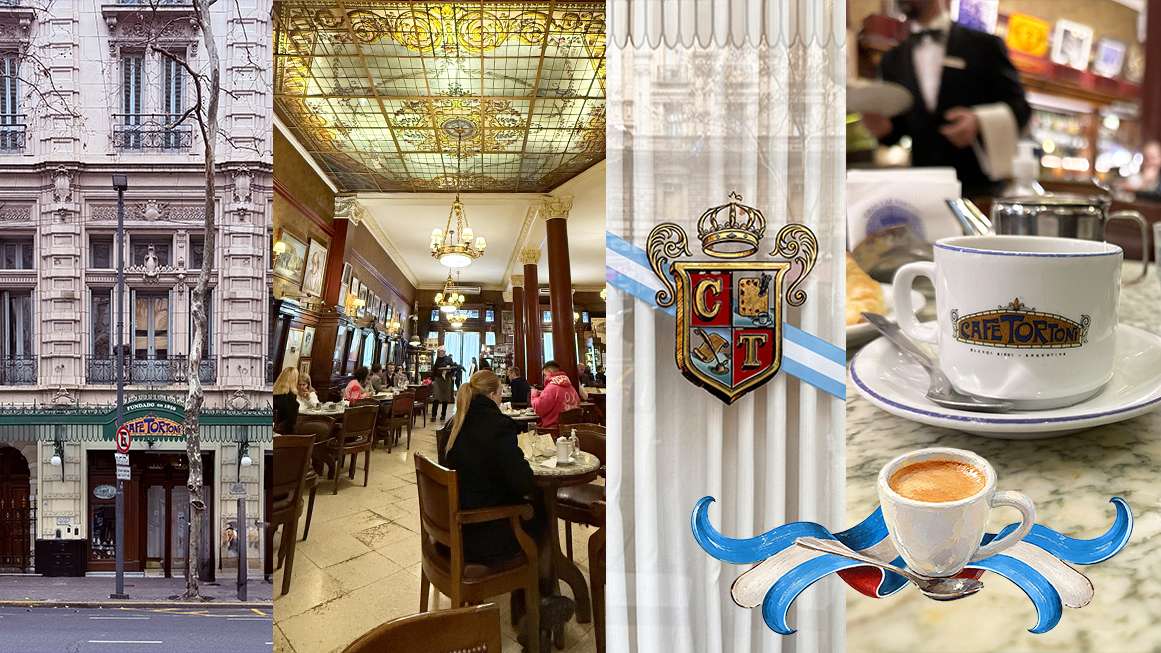
ReasonOn Avenida de Mayo in Buenos Aires, a line forms each day outside a café with a green awning, gold lettering on its glass, and wooden doors. In its main hall, three wax figures sit at a marble-topped oak table: Jorge Luis Borges, Alfonsina Storni, and Carlos Gardel. In a separate room, a weekly tango show gives visitors a taste of the Buenos Aires musical experience. The Gran Café Tortoni has been in business since 1858—older than the Argentine air force, Peronism, and the Argentine peso.
Historically, Tortoni was a hub for the exchange of art and ideas and helped develop the city's artistic and literary life. It hosted many of the protagonists of Argentina's rich history, and endured the worst of its upheavals, outlasting every government that promised to save the country but brought it to its knees instead.
The café was founded by Jean Touan, a French immigrant who arrived during one of Argentina's many immigrant waves. The country was young—it had declared independence in 1816—and hungry for ambitious individuals. By the time the café moved from Calle Esmeralda to its current home in 1894, Buenos Aires had begun a stunning transformation that earned it a reputation as "the Paris of South America." Tortoni's vitreaux ceilings, oak and leather chairs, and marble sidewalk tables made the café a miniature of the French capital. Buenos Aires' belle epoque reflected the country's increasing prosperity: By 1910, it was among the richest countries in the world.
Argentina's riches weren't only economic. Its cultural and intellectual life was flourishing, and Tortoni helped sustain it. In the 1920s, artists and intellectuals would gather in cafés around the city to discuss art and ideas. One evening in 1926, a group of them (including the renowned painter Benito Quinquela Martín) took their conversations to Café Tortoni—and kept coming back. The group occupied some of the best tables but consumed very little. Wanting to support the intellectuals but also eager to make room for paying customers, Pedro Curutchet, the new owner of the café, eventually approached the group and offered the basement for their gatherings. They accepted the offer and renovated the space themselves.
Within weeks, they founded La Peña del Tortoni, a private club of painters, writers, and musicians who discussed art and ideas and held concerts, poetry readings, and exhibitions. Curutchet told the group that "here one may converse, speak, and drink with moderation, and give the measure of one's savoir faire. But only art and the spirit have the right to express themselves here without measure."
In the span of 17 years, La Peña offered Porteños a place to express themselves freely over pastries and cortados. Some of the most renowned and influential cultural figures of the time, including Nobel laureate Luigi Pirandello, poet Alfonsina Storni, writer Federico García Lorca, and tango icon Carlos Gardel, gathered around Tortoni's oak and marble tables.
By the 1940s, as the famous tertulias were dying down, Argentina had begun experiencing the political turbulence that has characterized much of its history since then. In 1943, the country suffered its second military coup. The final blow came not from the military government, however, but from the Buenos Aires municipal government: It sent La Peña a notice saying the basement failed to meet the municipality's safety standards, ordering the project to end. Its leaders decided to acquiesce instead of fighting the bureaucrats.
La Peña's demise wasn't the end of Tortoni, and the café was a haven for art and free expression during Argentina's authoritarian years. It remained a place to meet, debate, and enjoy art through successive military coups and various other governments, including the rise of Peronism. Among the personalities Tortoni hosted during the tumultuous years of 1943–1982 were the writer Jorge Luis Borges—who "exchanged verses" with fellow poet Carlos Mastronardi, according to author Laura Arias—and the renowned scientist René Favaloro, who gave a speech where La Peña used to gather.
Tragedies came and went, but Tortoni kept serving its customers. It stood firm through the 1871 yellow fever epidemic, which killed about 8 percent of Buenos Aires' population. It endured six military coups—one of them among the bloodiest in Latin American history—and operated through periods of hyperinflation. Police shot people mere feet from its doors during the 2001 riots. Through it all, Tortoni answered only to its customers, remaining a place where people could meet over coffee and enjoy cultural offerings.
President Alberto Fernández's draconian pandemic restrictions brought the place to the edge of demise. Argentina had the world's longest continuous lockdown, lasting 234 days, among other oppressive measures. The government forced Tortoni to shut down after 162 years of continuous operation—again in the name of "safety"—and it was nearly forced to close its doors forever. As restrictions eased, Tortoni bounced back wounded but undefeated.
Nowadays, Tortoni is mostly a tourist attraction. It still serves coffee and hosts cultural activities, but it has adapted to the changing demands of its customers, who now are more likely to debate through their screens than in groups gathered at a café. Tortoni's resilience mirrors that of Argentina itself: a society that has struggled through chaos and misrule but keeps managing to push forward. When the café almost closed in 2020, a waiter told an Argentine outlet: "May these 162 years last another 162."
The post Argentina's Oldest Café Has Outlasted Authoritarians, Bureaucrats, and Lockdowns appeared first on Reason Magazine.