GTA VI is More Than Just a Violent Crime Thriller. It's an Unexpected Exercise in Love and Empathy
· Time
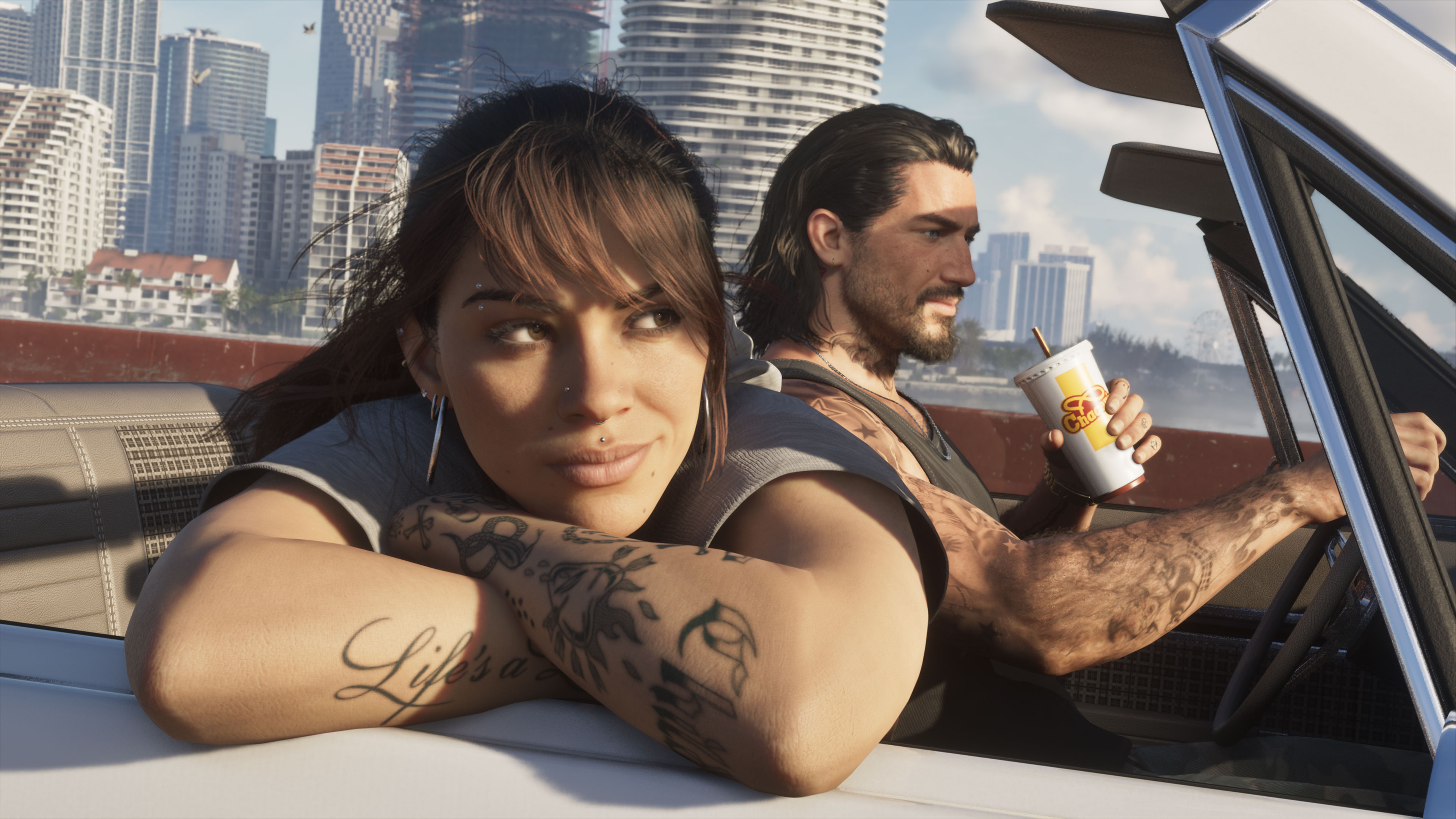
Grand Theft Auto VI is inescapable; everyone is talking about it. Even people and venues you wouldn’t expect are taking notice. I certainly didn’t have The Weather Channel and Anderson Cooper on my bingo card. Workers are taking time off to play and teachers have alternately canceled classes and bribed their students not to play hooky. GTA VI is one of the rare video games that transcends siloed awareness of the medium into mainstream consciousness.
Visit esporist.com for more information.
Video games aren’t nearly as widely covered as other forms of popular entertainment like TV, movies, and music, despite generating more annual revenue than all of them combined. GTA VI in particular has broken containment for a few reasons, not least of all that it’s been around for nearly three decades; it's preceded by its reputation for depicting mature themes, which in turn has made it a scapegoat for real-world depravity. And its scale is so vast, it’s easily one of the most lively and vibrant open-world games ever.
But it’s achieved cultural ubiquity not just because people have been waiting 13 years for the next installment of the video game franchise, nor that the level of detailed world-building, with literally thousands of non-playable characters, each imbued with their own colorful personality, is basically unprecedented in gaming. It’s that GTA VI offers everything fans have come to expect from the previous five mainline titles and numerous spin-offs, while adding an element that few imagined would define it: a deep and pervasive sense of empathy for its protagonists and the predicament that drives their behavior.
What grounds this empathy, while elevating GTA VI above its predecessors, is the love story between its two protagonists, who stick with each other through thick and thin to get rich. This so-called “crime simulator” has always been both a satire and critique of American life, but it is also now a beacon of hope and understanding, a window into an underclass with institutions stacked against their success by normal—which is to say, legal—means.
Warning: light spoilers follow
Partners in Crime
Lucia during her prison sentence —Courtesy of Rockstar GamesGrand Theft Auto VI follows a couple in Lucia Caminos and Jason Duval. In the opening, Lucia makes a rash decision to rob a payday loan store, getting caught in the process. She keeps exclaiming that she has something to return to as she’s being shoved into the back of a police car. Suddenly, the camera cuts back to the diner where Lucia was before she ran across the street to commit the robbery, revealing a carseat with Lucia and Jason’s infant son Tomás. It's an early plot twist that developer Rockstar Games kept well under wraps before the game’s release.
If you’ve only seen the GTA VI trailers, you’d think that all you do is steal money, shoot people, and drive fast cars for the thrill of it. To a certain extent, that’s accurate. But this revelation completely recontextualizes Lucia and Jason’s illegal actions later on: they want to make enough money to escape their circumstances and provide their son with a better life, and they don’t see any other way to do it.
That’s a goal that many parents can relate to, a fitting choice given that the average gamer is now 37 years old, many of them parents themselves. Who doesn’t want to give their kids a better life than they themselves had? But our Bonnie and Clyde have the deck stacked enormously against them. When Lucia is released from an overcrowded prison and she and Jason try to rebuild their lives, they’re unable to open a bank account due to their low credit, forcing them to rely on less secure methods like a fintech banking app. This storyline bakes a scathing indictment into the narrative of just one of many institutions that fail to support the most vulnerable, leading some to continue the cycle of violent crime as the only viable way out of poverty.
Leonida Keys, the game's version of the Florida Keys —Courtesy of Rockstar GamesPrevious games in the series have been underpinned by similar political and economic themes. Grand Theft Auto IV (2008) dealt with the immigrant experience and disillusionment with the American Dream. Grand Theft Auto V (2013) saw its three protagonists face the financial pressures of capitalism and the pursuit of wealth above all else. Grand Theft Auto VI goes beyond both previous installments with the introduction of the baby, which garners empathy among players as they come to understand the precarious situation in which we find our anti-heroes. The fact that the twist is unveiled within the first hour of starting the game immediately raises the stakes and delivers a gut punch faster than any GTA prologue before.
The seriousness of the story is offset by an infusion of playful irony. GTA VI takes place in Leonida, a fictional state inspired by Florida. It heavily satirizes both southern rural backwater stereotypes juxtaposed with Miami’s hyper-consumerist culture and nightlife through GTA’s counterpart for that city, Vice City. These elements not only make the game fun to play but soften the violence, in a sense. This is not just violence for violence’s sake; it's simultaneously critiquing our obsession with it.
A scene from Vice City, GTA IV's video game-within-a-game —Courtesy of Rockstar GamesGTA VI doesn’t necessarily say anything about class struggle that we haven’t seen elsewhere. Like the movie Parasite, our main characters try to move up in the world but do so within the confines of the existing capitalist framework, for their own personal gain, as they expand their criminal empire. They don't try to topple current power structures and ingrained inequalities, or actually incite a rebellion for the benefit of others, but we’re still rooting for them nonetheless.
And in a turbulent era of financial uncertainty with cryptocurrency, the rapid expansion of AI, and get-rich-quick schemes, it’s no wonder GTA VI is resonating so profoundly with players, especially younger ones. The alluring sense of control and stability brings them in and keeps them enraptured with Leonida. Lucia and Jason are our anchors to this world, a window into economic anxieties that may well resemble our own.
Love Conquers All
Jason and Lucia —Courtesy of Rockstar GamesWhile Lucia and Jason receive equal treatment in the story as playable co-protagonists, the former is by far the more compelling. Her strong personality makes her incredibly fun and likeable. Hardened by her upbringing in Liberty City, GTA’s New York City-inspired stand-in, she’s unapologetic and stands up for what she believes in. It’s a huge step forward for this game to have a multi-dimensional female protagonist, even more so a Latina, in a series that’s earned (and deserves) a reputation for sexism and objectification of women. Don’t get me wrong—there’s still plenty of both in GTA VI. During a story mission, I was throwing bills at a stripper in a night club. But GTA VI is an equal opportunist in ways we haven’t seen in previous installments. A few hours earlier I had Jason, wearing nothing but a jockstrap, giving lapdances to ladies.
Jason, the quieter of the two, is equally as charming (and, it’s worth mentioning, customizable, allowing players to play dress up and turn either character into someone they want to be, or be with). While he’s waiting for Lucia to get out of jail, the game’s missions had me picking up flowers and groceries for her while also fixing up the house before her return.
Jason’s sensitivity and golden retriever vibes are such a stark contrast to what players expected—more straightforward nihilism and bloodshed—that it’s been one of the most widely discussed elements of the game: everything from right-wing reactionaries deriding GTA VI as a “cuck simulator” to women celebrating that the game is teaching men how to treat their partners nicely. Amid a loneliness epidemic that’s more severe among young people, could video games be the cure to teaching men basic empathy? It sounds like a Nathan For You sketch.
Jason, keeping it fit —Courtesy of Rockstar GamesLucia’s tender behavior mirrors her partner’s. When Jason is knocking on death’s door further along in the story and temporarily out of commission, she spends the majority of the next act holding the fort down. She hijacks cars and steals to earn enough money to buy painkillers and nurse her man back to health. They’re more than just partners in crime—they’re partners in life. Their mutual respect and adoration makes their love beautiful and enduring in spite of their dire circumstances.
It’s worth noting that Jason’s missions of care are optional to completing the game. You could very well show up to Lucia’s prison release without fresh clothes and a spruced-up home and still eventually reach the end of the story. But the detailed characterization and depiction of their conditions move players to invest in the two, making you want to show up in these ways. That means going on big heists together and putting money into a family savings account, as well as even the little things like responding to texts and holding hands.
GTA VI keeps track of their relationship status in the same way it tracks their criminal profiles and cash reserves. In one mission, I was playing as Lucia and picking up fertilizer on behalf of a client. I refused to pay, leading to a shootout. When I accidentally ran over Jason with the getaway vehicle before he had a chance to hop in, the top corner of my screen displayed a purple heartbreak icon notification indicating that I had just soured the relationship. I felt so bad that I decided to restart at a previous checkpoint.
The game encourages you to go out of your way to intentionally include and consider your partner, but in the end, it’s all worth it, and not just because it impacts which ending you’ll get. The incremental decisions carry real emotional weight. Will Lucia and Jason reunite with their son again, or will they come crashing down in a blaze of glory? Or some combination of both? It’s up to you as the player whether or not this endearing tale ends in tragedy.
Life After Grand Theft Auto VI
Lucia Caminos —Courtesy of Rockstar GamesAlong with an astonishing 99/100 critic score on the review aggregator Metacritic, GTA VI has already sold 32.5 million units. It generated $3.79 billion in revenue on its day of release, setting the record for the biggest entertainment launch ever in history. It surpasses the entire theatrical box office run of the highest-grossing movie of all time, Avengers: Endgame, and Taylor Swift’s “Eras Tour,” the highest-grossing tour ever. This upcoming holiday, don’t be surprised when a family member asks during Thanksgiving dinner, “So have you heard of this thing on the news called GTA?”
It’s easy to see why gamers love GTA. Players have praised the latest entry for its gorgeous, hyper-realistic visuals, in addition to a star-studded soundtrack featuring artists like SZA and Travis Scott. The Instagram- and Snapchat-inspired in-game social media app, Snapmatic, has people reveling at how authentic the comment section is. Rockstar Games spent 13 years with a crew of nearly 5,000 people to make GTA VI gaming’s ultimate zeitgeist, and the enthusiasm has barely crested: in the future, the game will likely also come to PC with a new GTA Online mode, with many players paying a second time for the added benefits of more custom modification tools, higher fidelity graphics, and the chance to watch hell break loose in the multiplayer sandbox of Leonida.
Until that happens, though, the engaging and dynamic open-world will continue leading players to unpredictable and hilarious instances, whether it’s being relentlessly pursued by a demonic-looking boar or a random NPC seemingly doing a line of cocaine in the middle of a fist fight and knocking you out. By the same token, clips of more unsavory moments like shootouts with cops will be used to incite moral panic, reupping the finger-pointing at video games as a boogeyman for social ills despite the fact that scientific research has never definitively proved a link between them and real-world violence.
But one of the greatest contributions of GTA VI, less than a week since its release, is its reminder that video games are just waiting to be afforded the same careful analysis and water-cooler debate as the buzziest puzzle-box show or blockbuster comic-book movie. There is so much more beneath the surface; in this case, two kindred souls who want the same thing, in between a stick-up here and a smuggling run there. Perhaps this time, that sentiment will endure even as the frenzy around this particular game eventually dies down.