Report: Nvidia is preparing to oust CEO Jensen Huang after admission to affair with alleged Chinese spy
· Fortune
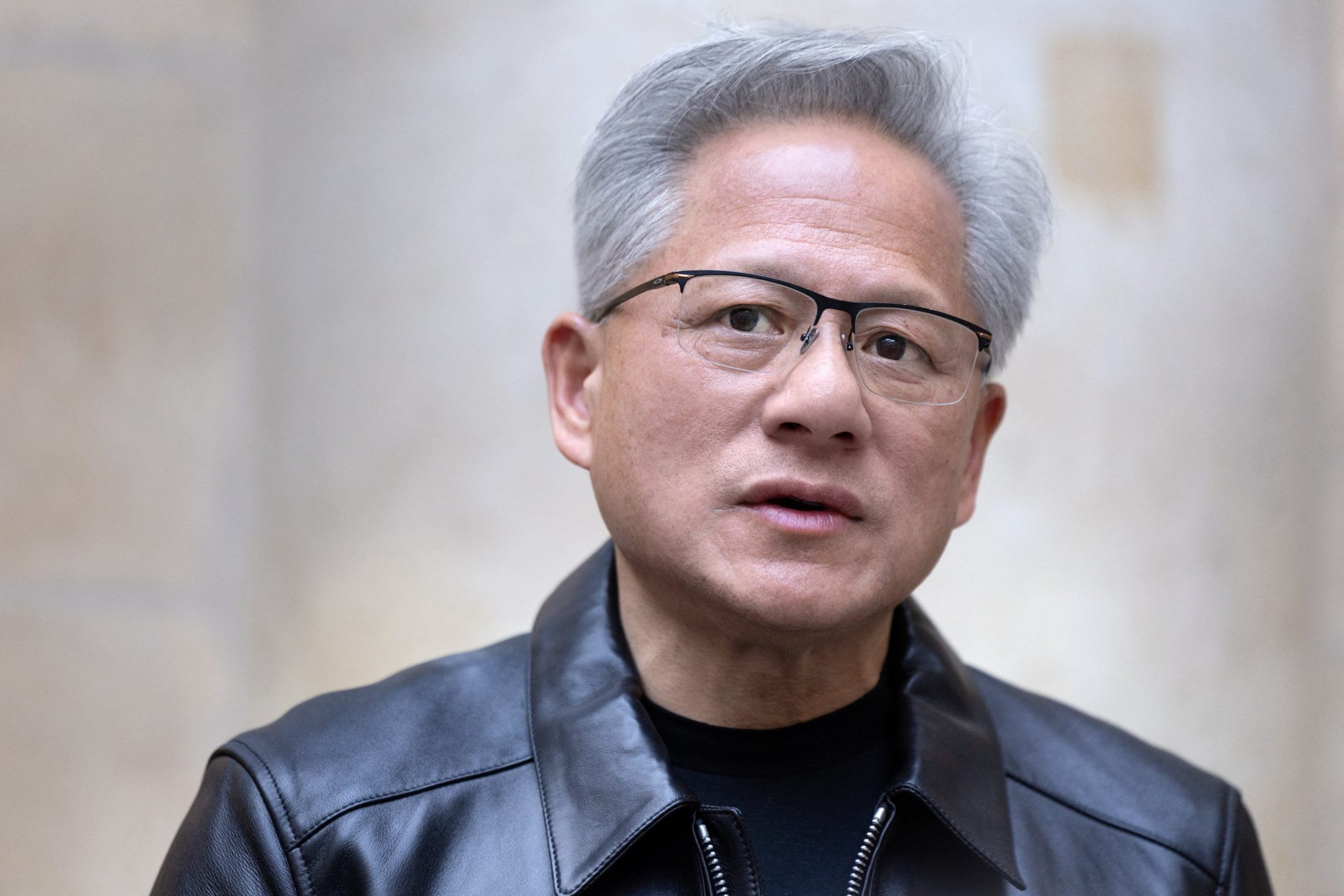
Nvidia’s board of directors is preparing to remove Chief Executive Jensen Huang, an ouster that would follow his admission of having an extramarital affair with a woman U.S. intelligence officials deemed to be a Chinese spy. The decision by the chipmaking giant, reported by the Wall Street Journal, would deal a swift end to Huang’s 33-year reign as CEO and promises to send shockwaves throughout the technology industry and upend America’s race in artificial intelligence.
The Journal reported that Nvidia’s board could meet as soon as Wednesday to determine his fate. On Wednesday, the New York Times reported that Huang, 63 years old, had also had an extramarital relationship with Kimberly Powell, the company’s vice president of health care. Powell could not immediately be reached for comment.
Visit afsport.lat for more information.
In after-hours trading, Nvidia’s shares were down more than 7%. According to LinkedIn, Powell has been with Nvidia for nearly two decades and previously spent 10 years in AI business development. Nvidia describes her as formerly leading the company’s higher education and research business, alongside Nvidia AI labs.
Huang’s long-term future with the company is not immediately clear. On Sunday, Huang acknowledged being unfaithful to his wife, and Nvidia announced an investigation into the reports that he had been targeted by a foreign intelligence effort. At the time, the board said it had “no reason to believe that either national security or NVIDIA secrets were compromised,” but that its inquiry would examine “all available information.”
Huang co-founded Nvidia in 1993 and has been integral to the company’s success, particularly its magnificent run in recent years. For fiscal 2026, which ended in January, the company reported revenue of $215.9 billion, up 65% over the prior year. Growth accelerated in the first half of fiscal 2027, with revenue of $96 billion, up 85% year over year. Nvidia previously guided third-quarter fiscal 2027 revenue to $108 billion, plus or minus 2%, and chief financial officer Colette Kress said the company expected 70% revenue growth in fiscal 2028.
Huang reigns supreme over the company. Since its founding, he has created a unique, flat structure in which he sits at the center of most decisions, with about 60 direct reports. Nvidia’s board operates without a chair, and the company has not set out a clear succession plan. It also does not have a chief operating officer. Huang is known to text and call small clients himself.
Nvidia’s succession challenge would not be whether its engineers can keep building chips without Huang, analysts say. It is whether anyone, or any leadership team, can inherit his authority to decide what gets built, secure the industry’s commitment to it, and keep customers confident in the next bet.
The factors behind Huang’s now-expected removal “hasten a transition the company is not prepared for,” Gil Luria, an analyst with D.A. Davidson & Co., told Fortune.
Nvidia’s board decision would be a forced hand. “There are rules about that; there are laws about that,” Jay Goldberg of Seaport Research Partners told Fortune, speaking about the untenability of Huang as CEO if there were internal policy violations. Nvidia won’t “go away. They’re sold out. It’s all contracted into next year, but it loses a lot of its luster. The chances of making a misstep are higher.”
If Huang is ousted, the most immediate question is who will succeed him, and what sort of new plan the company will put in place to fill the vacuum of power.
“Rarely has a board faced this much pressure. This is the board’s moment to shine or fade,” Michael Useem, a professor of management at the Wharton School of the University of Pennsylvania, told Fortune. “If the board had been doing its job, it would already have a slate of possible successors: people identified as likely successors.”
Business and law experts have said Nvidia’s chief financial officer, Colette Kress, could be an option for interim CEO. Another option would be to have one of the company’s directors, such as lead independent director Stephen Neal, who is chairman emeritus and senior counsel at law firm Cooley LLP, take over as interim CEO if Huang is removed. Huang’s children and son-in-law also work at the company.
Huang’s ouster would create a massive hole for the AI industry. Huang has been central to the industry’s rapid growth. His success in creating world-leading graphics processing units, the chips that power AI by handling model training and regular user queries, has been instrumental in ushering in the AI boom and in the U.S.’s leading position.
Few executives in Silicon Valley and beyond exert the level of power and influence over one company and industry. Huang’s institutional knowledge and deep industry connections have been among the reasons tech analysts and other experts have said it would be impossible to replace him. Another reason has been President Trump, who has become a close friend of Huang and stood by the executive since Sunday’s revelations, saying Huang is an “amazing guy” and “honorable man.”
This story was originally featured on Fortune.com