Why India is Erupting
· The Atlantic
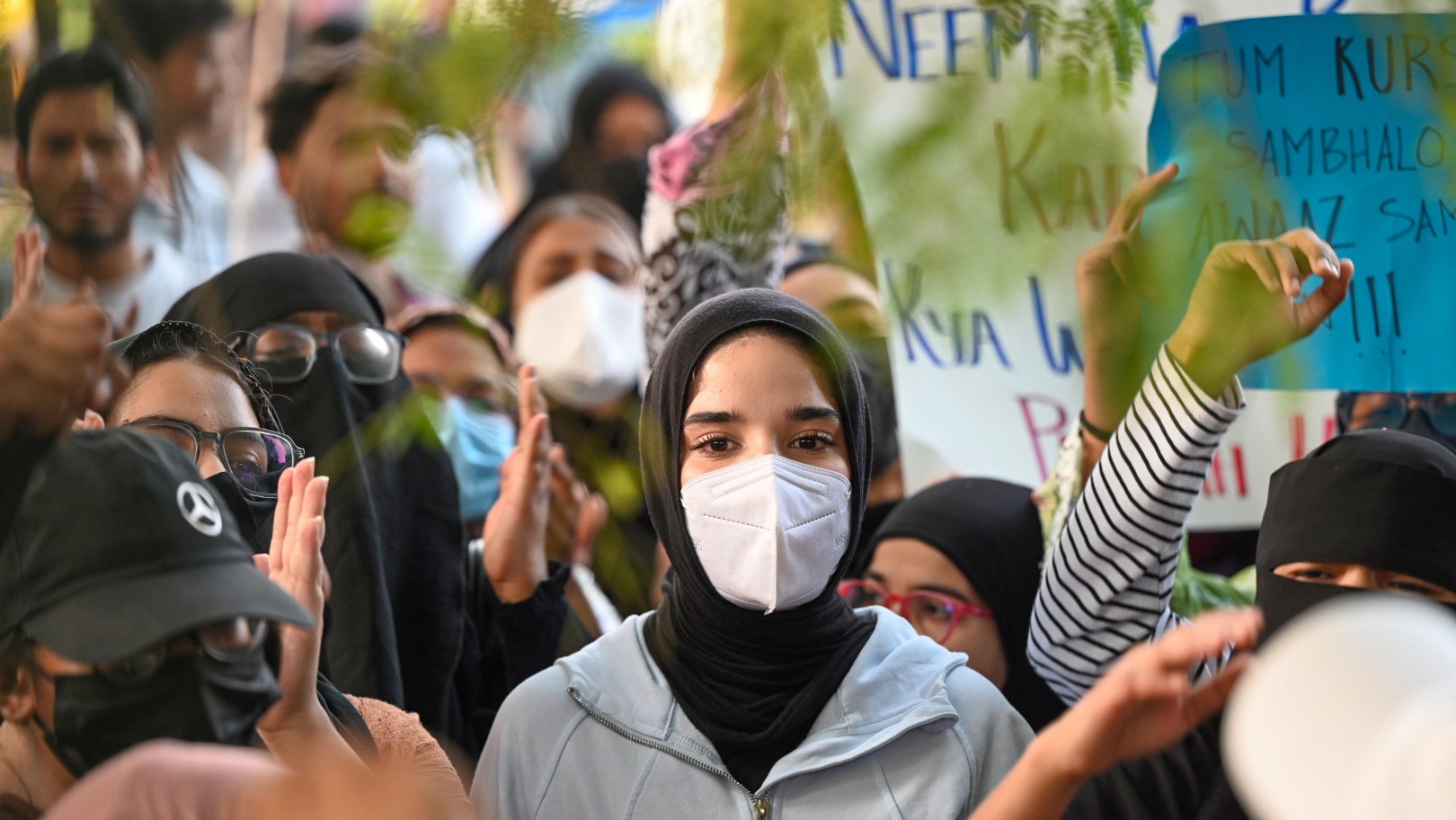
India has been convulsed with protests that challenge Prime Minister Narendra Modi’s authoritarian vision. The most recent of them are defending the franchise from an administrative action that struck millions of voters from the rolls. But the challenge to Modi’s Hindu nationalism really began over the summer, after India’s chief justice dismissed the country’s unemployed youth as “cockroaches” and “parasites.” Flipping the insult into a badge of honor, an Indian graduate student at Boston University, Abhijeet Dipke, began accounts across social media under the name “Cockroach Janta Party,” a play on Modi’s Bharatiya Janata Party.
Visit bettingx.club for more information.
Modi has been in power for more than a dozen years. In that time, he has faced nothing like the current level of unrest. The protests roiling the country suggest that he is vulnerable. They are also a consequence of his subversion of India’s democratic institutions: Street action has become the most potent means of contesting the Hindu-nationalist movement he leads.
The CJP held its first offline protest in June at Jantar Mantar, an 18th-century observatory in central Delhi. By that time, its Instagram account had amassed more than 20 million followers—more than the account for the BJP itself. The CJP demanded the resignation of Dharmendra Pradhan, India’s education minister, on the grounds that he had sabotaged the country’s high-stakes exam system and created uncertainty for millions of students. The demand was hardly a radical one to make in a democracy. But as part of his strongman persona, the prime minister has long made a habit of refusing to concede to public pressure.
[From the February 2025 issue: Narendra Modi’s populist facade is cracking]
The CJP enlisted the support of some prominent figures, including Sonam Wangchuk, an educator and activist from Ladakh, a Buddhist region bordering Kashmir. In late June, Wangchuk embarked on a hunger strike, a classical Gandhian form of protest that has deep emotional resonance in India. By its third week, the crowds at Jantar Mantar had surged, and the activist had lost more than 20 pounds, shrinking his body mass by 20 percent. Public clamor about Wangchuk’s deteriorating condition mounted, and the authorities forcibly removed him from Jantar Mantar.
Far from quieting the movement, this gambit transformed it into a mass uprising. On July 20, more than 100,000 protesters turned up for the CJP’s planned march to Parliament. The epicenter of New Delhi soon resembled a war zone; paramilitary forces lobbed tear-gas shells at protesters, while the cops pummeled the crowd indiscriminately with lathis, wooden clubs used by the Indian police. A paramilitary officer fired seven rounds of a pellet gun, injuring at least 10 protesters.
The violence provoked a countrywide backlash that went well beyond the education minister: The demonstrators began targeting Modi himself with expletive-laden chants. No previous Indian prime minister in living memory had faced this kind of public vitriol. The protests spread to more than a dozen cities across the country. And on July 25, Pradhan resigned.
Where established political parties and well-known civil-society organizations had failed, the CJP had achieved something extraordinary: A weeks-old youth movement blasted through the authoritarian firewall of Modi’s India, dispelled the climate of intimidation fostered by the Hindu right, and created a new democratic opening.
The columnist Tavleen Singh, once a Modi supporter, noted that “something fundamental had changed in recent weeks” and that “people seemed no longer scared.” Jawhar Sircar, a former opposition politician, wrote that the protests had “shattered the dome of fear and re-awakened India.”
Since the Cockroach movement’s victory in late July, protests have been erupting across the country—on city streets and university campuses, outside government buildings and police stations—against the rise in crimes against women, the poor quality of government schools, and a range of other ills. On October 7, a Mumbai newspaper reported that 88 protests had taken place over the previous 10 days in the western state of Maharashtra alone.
The latest round of demonstrations concerns the election commission’s review of voter rolls, which began last year and has so far purged more than 130 million citizens. In a country whose adult population is growing, the number of eligible voters shrank by more than 10 percent; those voters expunged were disproportionately Muslim. A September 23 report in the newspaper Indian Express revealed allegations from two election commissioners that Gyanesh Kumar, India’s chief election commissioner, had taken “unauthorized and illegal” actions in relation to the revision.
Kumar is widely seen as an acolyte of India’s ruling establishment. In 2023, shortly before he was appointed, the Modi government pushed a law through Parliament giving election commissioners lifelong immunity from prosecution. This sweeping immunity does not exist for any other government official in India—not even the president or prime minister.
[Read: Modi’s escalation trap]
The Cockroach protests during the summer were primarily a youth phenomenon, but the subject of voting rights, in a country with a proud democratic history, has universal resonance. Despite being largely poor and illiterate at the time, India enshrined the universal adult franchise shortly after its independence in 1947, inaugurating one of the world’s most audacious democratic experiments. Since then, elections and voting have become something akin to a sacred rite, emanating from the founding ethos of modern India.
A large portion of the Indian public views Kumar’s actions as equivalent to treason. The protesters are demanding that he be removed, that the revision to the voter rolls be reversed, and that the law bestowing lifelong immunity on Kumar be scrapped so that he can be prosecuted.
Earlier this month, episodic mayhem took over New Delhi as protesters blocked streets, detainees on police buses smashed the windows and escaped, and demonstrators perched on the roofs of government vehicles in acts of defiance. I met Indians of varying ages, backgrounds, and political convictions at those protests: construction workers, upper-class designers, Communist foot soldiers.
But the Modi government seems to fear nothing more than the Cockroach movement. The youth group, which threatened to instigate nationwide demonstrations if Kumar did not resign, announced a protest in New Delhi on October 10, and the government panicked.
The authorities transformed New Delhi into a fortress, flying in tens of thousands of paramilitaries from the hostile borderlands where they are usually deployed. Much of the city’s subway network was shut down. Trains scheduled to arrive from all over India were canceled at the last minute, to prevent protesters from swarming the capital.
Security forces detained thousands of protesters and dozens of journalists. Right-wing militias threatened demonstrators unhindered by the police. The Cockroach leaders, who’d flown in from Mumbai that morning, were arrested aboard their airplane. Central Delhi was a militarized web of barricades and armed enforcers.
Ishrat Ansari, a 49-year-old schoolteacher, had walked two miles from her home to the barricades near Jantar Mantar. She had been detained on a police bus, where she saw a reporter beaten and was so disturbed that she vomited. The heavy-handed measures, she felt sure, were a sign of the regime’s growing fear. “They are taking away our voting rights,” she told me. “When we elected you with our vote, how can you cancel us?”
A government once confident in its ability to set the terms of the public conversation had resorted to lockdown and repression. Surely this was an admission of the failure of the Hindu right’s formidable propaganda machine to steer the narrative.
The protests have not relented. A march on October 12 from New Delhi’s commercial center to the supreme court a mile away was one of the largest protests the city has ever seen. Rahul Gandhi, the leader of India’s opposition, announced it and called on ordinary citizens to participate. That tens of thousands did suggests that the clampdown over the previous two days resolved nothing in the government’s favor—on the contrary, the apparent subversion of India’s democratic tradition was having a galvanizing effect on those determined to resist it.
The previous week, Gandhi had led more than 300 members of Parliament in a march toward the office of the election commission. At that time, he was stopped by the police. Now, a week later, he was leading a gargantuan crowd toward the supreme court. These two constitutional bodies were once fiercely autonomous. Under Modi, they have turned servile. Challenges to the revision of the voter rolls came before the supreme court earlier this year, and the court sided with the election commission, despite strong evidence of disenfranchisement. In an election in West Bengal, for example, Modi’s BJP won many seats by a margin smaller than the number of deleted voters.
[Read: The humbling of Narendra Modi]
As the march neared the supreme court, I stood roughly 20 feet away from an open-top truck painted in the colors of the Indian flag, where Gandhi was surrounded by leaders of opposition parties and civil society. The alliance recalled the diverse, umbrella coalition that had defeated Prime Minister Indira Gandhi after the Emergency, India’s previous spell under authoritarian rule in the 1970s.
Saraswati Sharma, a 60-year-old homemaker, had made the 90-minute trip from the adjacent city of Gurugram. Her name had recently been struck off the voter rolls, after she had moved from Delhi, where she had been a registered voter for decades.
The revision deleted the names of not only Muslims, but also a variety of other inconvenient populations: the residents of neighborhoods associated with the opposition, members of low-income groups that were not considered reliable supporters of Modi’s party. Any small, seemingly insignificant detail—a spelling error, having a suspiciously high number of children—could be used to question a voter’s validity and strike them from the rolls.
“We have never seen such a compromised situation,” Sharma said, lamenting the loss of legitimacy of the supreme court and the election commission. Slogans denouncing Kumar as a traitor rang out in the background, and Sharma told me the march was the first time she had felt compelled to show up at a protest in the Modi years. “This is like a freedom struggle.”