Trump's Russian Oil Tariff Waiver Could Ease Inflation and Boost India's Growth Beyond 7.5%
· Free Press Journal
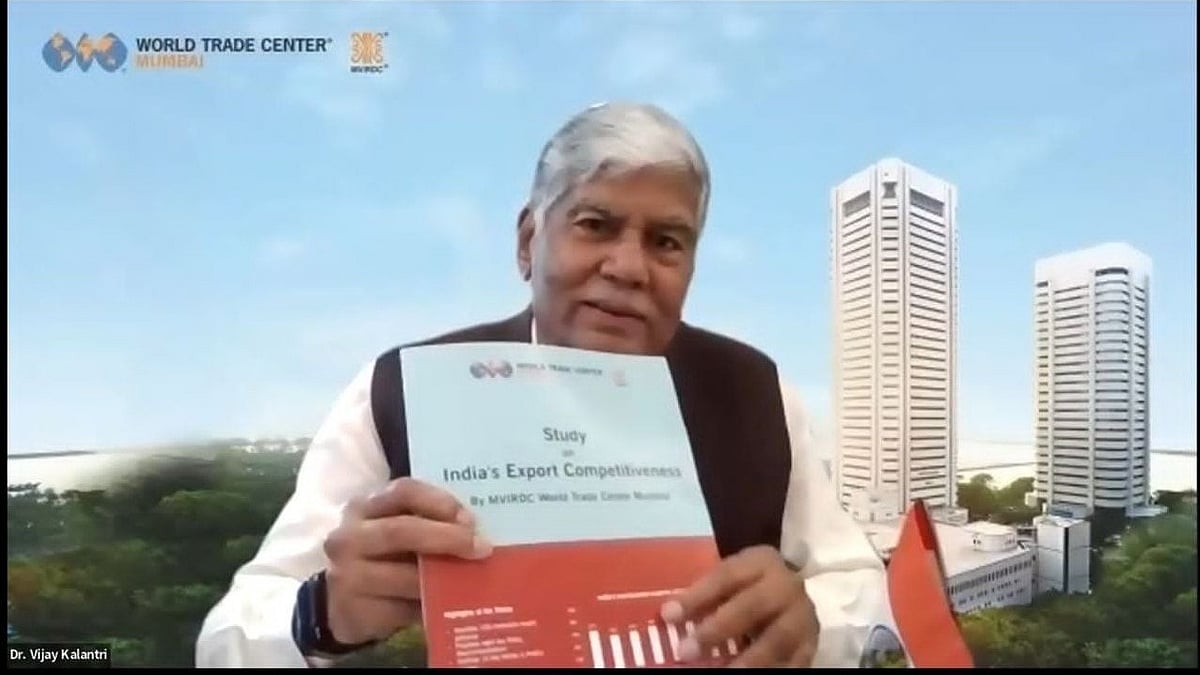
“US President Donald Trump's decision to waive tariffs and sanctions under the Lindsey O. Graham Sanctioning Russia and Iran Act of 2026 could provide significant relief to the Indian economy by easing uncertainty in global energy markets and reducing the threat of additional trade barriers. If international crude oil prices moderate, India stands to benefit through a lower oil import bill, reduced inflationary pressures and improved competitiveness of domestic industries. Combined with India's expanding network of Free Trade Agreements (FTAs), a more favorable energy environment could create conditions for economic growth to exceed 7.5%,” said Dr. Vijay Kalantri, Chairman, MVIRDC World Trade Center Mumbai and President, All India Association of Industries (AIAI), commenting on the recent executive order signed by US President Donald Trump.
Dr. Kalantri observed that the decision comes at a crucial time, with the approaching winter season increasing energy requirements across major economies and the forthcoming US midterm elections bringing greater attention to domestic fuel prices and inflation. He noted that the waiver could help ease geopolitical uncertainties surrounding Russian energy supplies and improve market sentiment.
Visit somethingsdifferent.biz for more information.
“India, being a major importer of crude oil (nearly 88%), is particularly sensitive to fluctuations in international energy prices. A sustained reduction in crude oil prices would help contain imported inflation, reduce transportation and logistics costs, ease pressure on the current account deficit and improve overall macroeconomic stability. Lower energy costs would also provide relief to consumers, strengthen purchasing power and support domestic demand, thereby creating a positive multiplier effect across the economy,” Dr. Kalantri added.
Highlighting the implications for Indian industry, Dr. Kalantri said, “MSMEs, manufacturing enterprises and export-oriented industries would be among the major beneficiaries of lower energy costs and reduced trade uncertainty. Petroleum-based industries, including petrochemicals, plastics, chemicals, synthetic textiles, packaging and other downstream sectors, could benefit from more competitive input costs. This would improve operating margins, enhance export competitiveness and encourage fresh investment, production and employment generation. This will also have a positive implication on the stock market, which has been excessively volatile over the week”.
Dr. Kalantri further emphasized that the waiver could help protect Indian exporters from the immediate risk of additional US tariffs linked to Russian energy purchases. “India has the potential to sustain growth above 7.5% if favorable global energy conditions are supported by stronger manufacturing, export expansion, investment and continued policy reforms. Lower crude oil prices, a manageable import bill and improved business confidence would provide additional momentum to India's growth trajectory. The priority should be to translate these external developments into lasting gains for MSMEs, industry and employment while strengthening India's journey towards Viksit Bharat 2047,” Dr. Kalantri concluded.