CJP Agitation: Intelligence Agencies Examine 4,000 Social Media Posts, Suspect Possible Foreign Interference
· Free Press Journal
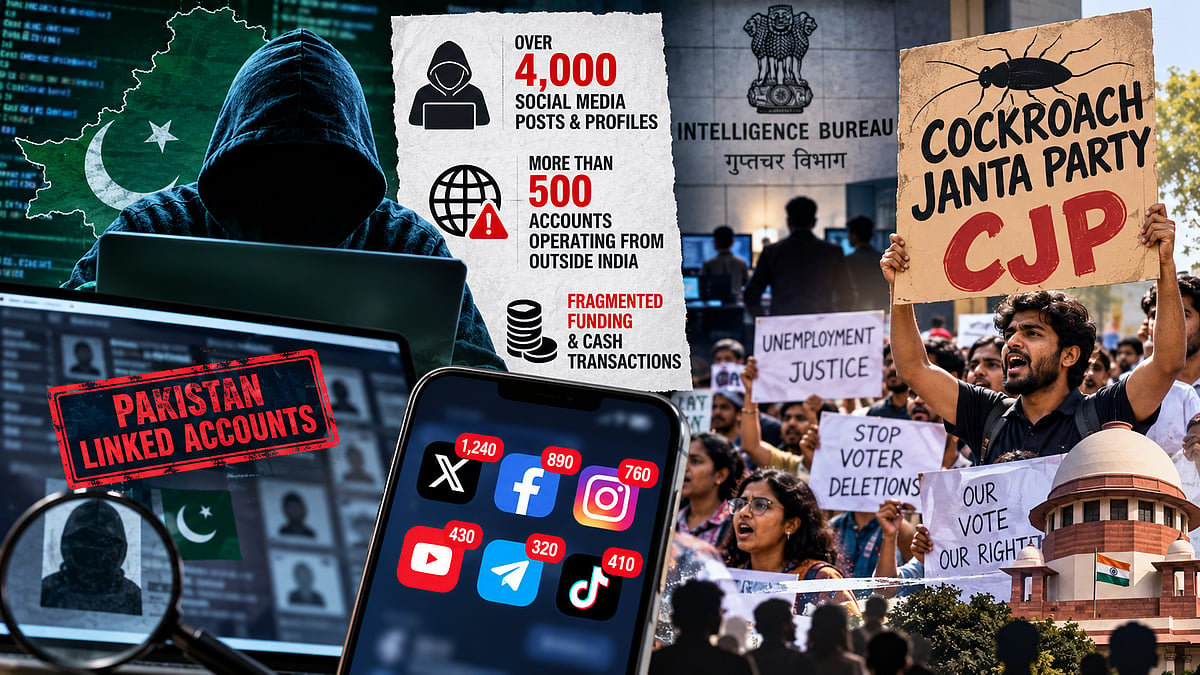
Pakistan-linked accounts, over 4,000 social media posts and profiles, and more than 500 accounts allegedly operating from outside India have come under the security agencies’ scanner amid concerns over possible foreign interference in the Cockroach Janata Party (CJP) agitation. An intelligence assessment has flagged the group’s funding and logistics, citing fragmented fundraising, cash transactions and material donations in the absence of a central treasury or bank account.
Visit newssport.cv for more information.
Intelligence Agencies Flag Public Order Risks
In a recent intelligence briefing at the Subsidiary Intelligence Bureau (SIB) it was noted that the situation remained fragile in several parts of the country and cautioned that external entities and anti-social elements could attempt to exploit the agitation to disturb public order.
“The Intelligence Bureau has called for closer monitoring of developments and coordination among the concerned sister agencies in its assessment of the Cockroach Janta Party (CJP),” an agency is said to have mentioned in its meeting.
Cyber Agencies Examine Suspicious Accounts
The Indian Cyber Crime Coordination Centre (I4C), state cyber units and other specialised agencies are examining the origins and activities of the suspected accounts, possible coordination among them and the content being circulated. The exercise aims to assess whether there is any foreign involvement and whether the online activity poses potential risks to public order.
The agency, in its assessment, flagged the potential misuse of CJP’s digital reach to circulate misleading information, manipulated videos and inflammatory messages through fake accounts, similar usernames and profile images, impersonation of supporters, coordinated sharing of identical content and unauthorised access to social media accounts.
Officials Warn Of Online Manipulation
The agency officials, in the briefing, further mentioned that such methods can amplify particular narratives, create an impression of widespread support and can make it difficult to distinguish between the authentic communications and the fabricated content. “During an active agitation, misleading claims or inflammatory messages falsely attributed to movement organisers could aggravate existing social tensions and trigger confrontations,” an agency official noted.
Recently, Khalistani separatist Gurpatwant Singh Pannun, associated with Sikhs for Justice (SFJ), was reported to have expressed support for the CJP agitation in a social media video. The Indian government has designated Pannun as a terrorist under Indian law. His reported endorsement has drawn attention in the context of the agitation and the possibility of external actors seeking to associate themselves with domestic protests.
Indian Coast Guard Enhances Aerial Presence In The Western Region With 831 Sqn At Ratnagiri Receives Its First ALH MK-III HelicopterThe agencies even believed that foreign intelligence services, extremist networks or other hostile entities, including notorious characters like Pannun, may seek to exploit domestic tensions by spreading divisive narratives or misleading information exploit these gaps to amplify grievances, circulate misleading information, deepen communal or social divisions and influence the course of the agitation. “In the absence of clear lines of authority and accountability, identifying those responsible for such activities and determining whether they form part of a coordinated effort becomes more challenging for security agencies,” an official observed.
The Cockroach Janta Party (CJP) emerged on May 16 as a satirical online movement led by Abhijeet Dipke, following a controversy over remarks reportedly made during a judicial hearing about unemployed youth. It gradually evolved into a youth-led protest movement raising issues related to unemployment, examination irregularities and electoral rolls.
In June and July, the CJP group held demonstrations in Delhi, including at Jantar Mantar, seeking accountability over education-related concerns. More recently, it has turned its attention to the Election Commission’s Special Intensive Revision (SIR) of electoral rolls, raising concerns over voter deletions and demanding Chief Election Commissioner Gyanesh Kumar’s resignation. The agitation has continued into October, with detentions reported during protests in Delhi and demonstrations in other cities, bringing electoral accountability and the right to protest into focus.
(This is the first of the two-part series)