Meet the 2026 Nobel Prize Winners
· Time
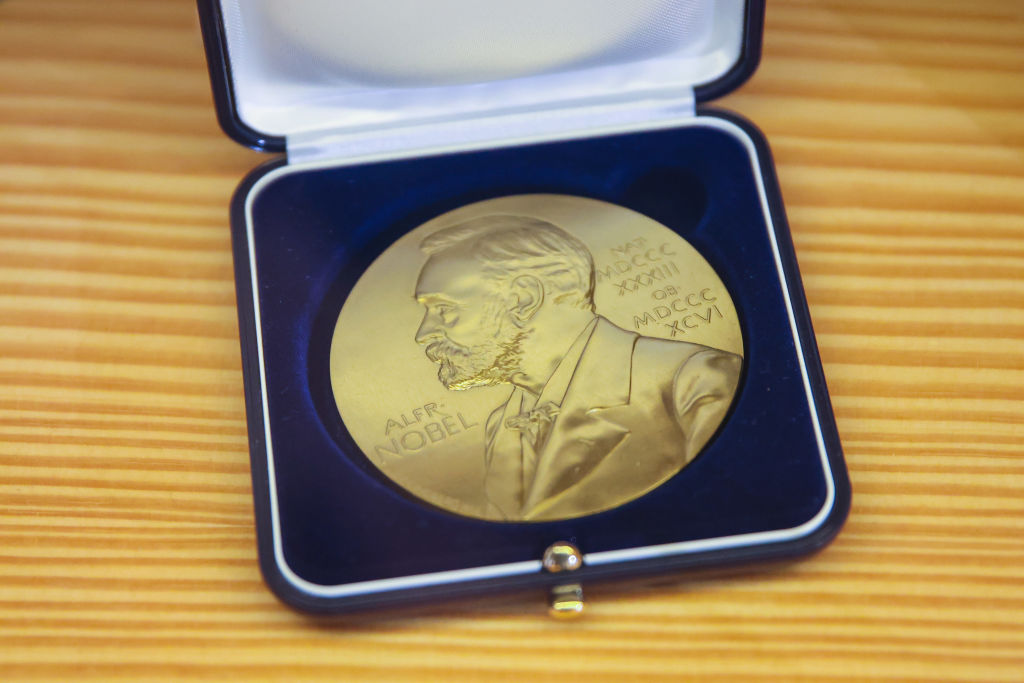
The unveiling of the 2026 Nobel Prizes is now underway.
Visit librea.one for more information.
The Nobel committees announced the year’s first winners on Monday, awarding the prize for physiology or medicine to a trio of scientists who the committees said have “laid the foundation of a new era in neuroscience.”
The news kicks off a week of announcements for the prestigious prizes, which are awarded each October to individuals or groups for outstanding contributions across six fields: physics, chemistry, physiology or medicine, literature, peace, and economic sciences.
The committee will continue revealing the winner or winners of one category every weekday until the final laureate is announced. The physics award will be given on Tuesday; chemistry on Wednesday; literature on Thursday; peace on Friday; and economic sciences next Monday, Oct. 12.
Winners will receive a diploma, a medal, and 12 million Swedish kroner—the equivalent of roughly $1.2 million—during the award ceremonies in Stockholm and Oslo in December.
The peace prize, often the most closely watched of the awards, will be given to one of 287 candidates who were nominated this year, the Nobel committee said.
Last year, the honor was awarded to Venezuelan opposition leader María Corina Machado to honor her work fighting against dictatorship and promoting democracy in her country for nearly 25 years. Machado later gave her medal to President Donald Trump, who has long coveted and publicly campaigned for the prize, after the U.S. ousted former Venezuelan President Nicolas Maduro in a military raid in January.
Read More: Meet the 2025 Nobel Prize Winners
The committee, however, issued a statement in the wake of the gesture declaring that laureates cannot share or transfer prizes.
“The decision is final and applies for all time,” the committee wrote.
Trump has again been nominated for the peace prize this year, but is not expected to win the award amid the U.S.’s ongoing war with Iran.
Here’s what to know about the 2026 winners who have been announced.
Physiology or medicine
Karl Deisseroth, Peter Hegemann, and Georg Nagel were awarded the Nobel Prize in physiology or medicine for their pioneering discoveries in optogenetics, a method that uses light to determine how cells operate in the brain or even to exert control over those processes.
“Optogenetics provides opportunities for mapping the brain in a way that we could once only dream of,” said Per Svenningsson, chair of the Nobel Committee for physiology or medicine.
Hegemann is a professor of biophysics at Humboldt University in Berlin. Nagel teaches plant physiology at the University of Wurzburg in Germany. And Deisseroth is a professor of behavioral sciences at Stanford University.
The laureates' use of optogenetics will allow researchers to “discover exactly which of the nerve cells in a complicated bundle control different brain functions,” such as those related to pain, social behavior, thirst and hunger, and reward and attention, the committee wrote.
Nagel said in an interview with the Nobel Institute that he was “very surprised” upon receiving the news and that he thought it was “too early to get this prize in medicine optogenetics,” given his belief that other medical discoveries have benefited a greater number of people. Hegemann said to the institute that he was “overwhelmed” upon receiving the news.
Deisseroth, who has similarly said he was “quite surprised” to receive the honor, told Stanford Medicine that he “couldn’t be happier,” noting that “the trio that the committee picked spans the progression from the early algal explorations all the way to advanced neuroscience experiments.”
“So this prize really captures the full journey of discovery,” he said.