US Meddling in Brazil May Decide Latin America’s Future
· Jacobin
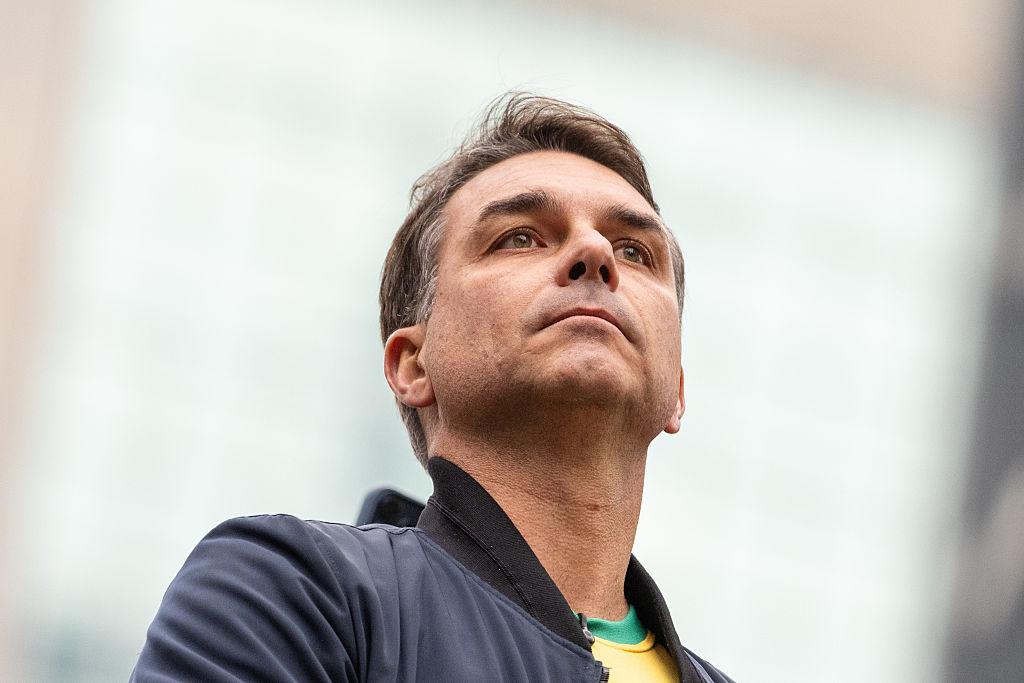
As Brazil heads toward Sunday’s presidential election first round, the contest is on a knife-edge. Polls show left-wing president Luiz Inácio Lula da Silva neck and neck with the ultraconservative Flávio Bolsonaro, the oldest of his imprisoned father’s brood.Jair Bolsonaro was defeated in 2022, as was the subsequent attempted coup that led to his criminal conviction. (He is now under house arrest.) Still, Bolsonarismo remained a powerful force. Compared to the high drama of four years ago, this campaign has at times seemed subdued, in part because most other candidates essentially offer duller, more gray-haired versions of Bolsonarismo.And yet the stakes couldn’t be higher. Not only is Brazilian democracy again on the line, but the region more widely is increasingly subject to right-wing authoritarians in thrall to Donald Trump and Marco Rubio. Brazil is for now an exception, along with Mexico — that is, Latin America’s two largest economies and most populous countries.If Brazil does follow the recent right-wing trend, the region’s future is grim. US intervention in favor of Flávio Bolsonaro has been brazen; Brazil’s national intelligence agency, ABIN, has presented evidence of meddling ranging from “from lawfare to interference that is openly acknowledged.” It is not the only factor, but it is making itself felt.Lula 3.0While Lula’s third stint in government has offered a sense of normality and economic gains for Brazil’s working class, his agenda has been hamstrung by the most right-wing Congress in Brazilian history. He has been held back by three main forces — the so-called Bible (evangelical), Beef (agribusiness) and Bullet (military/police) lobbies.Lula’s third term has had its achievements: above-inflation increases in the minimum wage, healthy growth, and expanding social security, plus historically low levels of unemployment. But he hasn’t had a singular major policy win of the kind that led to him leaving office in 2010 with an 80 percent-plus approval rate. While most Brazilians are technically better off than four years ago, the cost of living is higher, as are levels of indebtedness; four-fifths of Brazilian families are in debt, in part driven by the social cancer of online gambling. Jobs are increasingly precarious, and public security remains a key drama; though violent crime is down, rampant phone theft and extraordinarily high levels of online scamming make crime a daily concern for millions.After Jair Bolsonaro was convicted and sentenced to twenty-seven years in prison, along with several major allies, it seemed as if the leadership of the Brazilian right was up for grabs. However, the power of Bolsonarismo became clear as soon as Flávio announced he was running. All the other major contenders, like São Paulo Governor Tarcísio de Freitas, dropped out of the equation. Flávio also blocked the potential candidacy of his stepmother Michelle, who has built a large and especially female evangelical base; she offered a tepid endorsement only after public squabbles with her stepson.Even for seasoned Brazil watchers, it has been hard to reckon with the possibility that this country might soon elect its version of Jackie Aprile Junior, whose main goal is to free his father. Still Flávio, dubbed “01” by Jair, a typical mobbed-up Rio politician, has styled himself as more moderate than his father and is also the relatively normal one in the Bolsonaro clan. He is more normal, at least, compared to his deranged troll brother Carlos (“02”), a Senate candidate who happens to have a tattoo of his dad’s face on his arm; or the self-exiled former Congressman Eduardo (“03”) who, after losing his seat due to prolonged absences, has been lobbying from Texas for Trump to impose sanctions on Brazil.This is an election perhaps best defined by “apathetic polarization,” to use Brian Winter’s phrase, where policy or future vision is secondary to passive distaste for the candidates. In the right-wing camp this especially means a widespread anti–Workers’ Party (PT) sentiment known as anti-petismo, in which Lula’s party is blamed for all of Brazil’s ills and even right-wingers’ personal troubles.To paraphrase Celso Rocha de Barros, one of Brazil’s leading public intellectuals: Flávio is a stand-in for various sinister interests — the gambling lobby, banking fraudsters, imperial Miami, organized crime, and social-security scammers. His program mostly consists of law-and-order bromides about chemical castration for rapists — slightly complicated by the fact that his running mate has been accused of raping a minor — and constructing five megaprisons. However, his real program is basically about handing over Brazil’s critical minerals and sovereignty to Trump and Rubio in order to free his dad.Lula’s campaign has picked up some momentum in the final stages of the campaign. One smart move was to ban Brazil’s largely unregulated and highly exploitative online sports betting and casino apps, modeled after cellphone games called tigrinho, and known colloquially as “bets.” Gambling was legalized under Bolsonaro and has had a devastating effect on working-class life; his ex–Chicago Boy finance minister, Paulo Guedes, infamously remarked, “Let everyone f–k themselves over” at a cabinet meeting deciding on the move. Lula is also seeking to change the country’s employment code from “6 x 1” (six days of work, one day off) to a two-day weekend.The fact that this election remains a coin toss is in part due to a familiar pattern of frustration with the incumbent. Still, that doesn’t explain how Flávio has a real chance of victory, given his own lack of personal appeal, his connection to almost every corruption scandal and organized crime group in Brazil, as is the fact that his father is in prison for an attempted coup, not to mention the previous Bolsonaro government’s disastrous response to COVID, which actively contributed to the death toll of over seven hundred thousand. Something deeper and more paradigmatic is going on, reflecting the fragmentation of Brazilian society under late neoliberalism and the destructive effects of the attention economy.As Rodrigo Nunes, author of a new tour de force on the global right, puts it in a recent interview with Equator magazine, in Brazil we see both a “hyper-individualisation of politics and the privileging of online participation over offline organising. It profoundly shapes how most of the contemporary far right is organised: as a sort of pyramid scheme whose building blocks are ‘political entrepreneurs’ — people who, from a position of prominence on social or traditional media, produce content that at once accrues attentional, social and political capital.”Still, while this reflects deep shifts in Brazilian society, there is also a cruder force at work: US interference.Trump’s RoleAs Piero Locatelli writes, this is a country where businessmen openly “admit on podcasts that they are part of U.S. networks that work with Brazilian campaigns” also because “firms linked to Donald Trump, Jr (as well as J. D. Vance) invest in the extraction of rare earth minerals here.”Naturally, for analysts — in Brazil and internationally — conditioned to viewing claims of US intervention as vulgar or conspiratorial, it has been hard to process the reality and significance of meddling and dark ops in this election. Even most left-wingers tend to point toward the significance of material factors rather than CIA hijinks. Still, in an election with such close margins, US intervention really may be decisive, as we have already seen in Peru, Colombia, and Honduras, where right-wingers won with less than 1 percent advantage.Now even The New York Times is calling out US electoral interference. Last week, thirty members of Congress, including Bernie Sanders, wrote a letter declaring that “rather than helping defend Brazilian democracy,” the United States was “acting as an agent of interference and destabilization — using diplomatic, economic and political pressure in ways that risk weakening the country’s democratic institutions” and even hurting a strategic US ally. This week, Democratic Senators Jeanne Shaheen, Tim Kaine, and Peter Welch asked Rubio if the administration will recognize the election results if it doesn’t go Flávio’s way. Rubio is, predictably, yet to respond.Some of these measures are overt, such as Trump tweeting endorsements or threatening Latin American leaders with the “Venezuela option.” He does so either by pointing a metaphorical gun to their heads via X or providing major financial aid, like the $20 billion to help out Argentinian President Javier Milei in the local elections, and the recent suspension of all consular services in Brazil on the eve of the elections.Perhaps the most dangerous move was designating Brazil’s two largest criminal factions, Rio’s Comando Vermelho (CV) and São Paulo’s Primeiro Comando da Capital (PCC) as narcoterrorist organizations despite them having negligible, if any, presence in the United States. This classification potentially opens the door to unilateral military strikes on suspected narcoterrorists within Brazil’s borders. Through the recently launched Shield of Americas initiative, Trump’s willing vassals followed suit in classifying the CV and PCC as narcoterrorists at a meeting held during the United Nations’ General Assembly.Other approaches are more covert. One senior Brazilian cyber official told Reuters that “the number of cyberattacks in Brazil had nearly doubled compared with 2025” combined with a sharp increase “in hacks and phishing attempts of the president’s office,” which the official said was clearly election-related. This week’s revelations include a Trump-funded influence campaign against Brazil’s Supreme Court.We have also been offered a window into the sheer scale and depravity of the political fixers and influence peddlers that make regular journeys between Mar-a-Lago and Latin American capitals in the case of a particularly sleazy Argentinian named Fernando Cerimedo. He has been described by the Economist as MAGA’s man in America, whose sordid dealings came to light after he allegedly ordered a (failed) hit on his pregnant girlfriend in Bolivia. He is also charged with protecting cocaine shipments for a fee heading to Brazil, presumably to “narcoterrorists”; Cerimedo made his bones working on the 2022 Bolsonaro campaign pushing pro-coup narratives and has close ties to the family; he claims to have befriended Eduardo at Harvard (which neither of them attended). This week, on orders from Rubio, Bolivia arrested the man looking into the Cerimedo affair, Attorney General Roger Mariaca, two days after the United States revoked his visa, accusing him of the same charges facing Cerimedo. This move, in turn, was applauded in an official statement from the Shield of the Americas.There is even a segment of Bolsonaro supporters who have a perverse fantasy of Trump invading the country and eliminating the Left once and for all; “Come soon, Trump, do what you did in Venezuela. The decent Brazilian supports you,” as Mario Rey of São Paulo wrote in a letter published by Folha de São Paulo, Brazil’s paper of record.The Endless Pitfalls of Anti-Corruption PoliticsThis campaign has also been defined by the largest banking fraud in Brazilian history, in which Banco Master’s CEO Daniel Vorcaro allegedly operated a $10 billion pyramid scheme by buying off much of Brazil’s elite, including at least five members of the Supreme Court. They were allegedly won over with $8,000 bottles of whiskey, investments in the companies of justices’ relatives, and private parties featuring the likes of Swedish House Mafia and Flo Rida at São Paulo clubs, with a carefully curated selection of international young female company.Due to the role of the Supreme Court — in particular Justice Alexandre de Moraes — in prosecuting Jair Bolsonaro and making inquiries into his disinformation machine, there is an ongoing perception that the court is allied with the Left, rather than simply acting in self-interest in a way that on occasion aligns with Brazilian democracy. This same court, after all, blocked Lula from running in 2018. As a result, the ongoing scandal has been more damaging for Lula than Flávio, despite the latter hitching rides on Vorcaro’s private plane and soliciting $28.2million for the most expensive film in Brazilian history, a biopic of Jair starring Jim Caviezel titled Dark Horse. Despite the cash, this film does not have a release date, and the only footage ever released was taken down from X after Beyoncé sued the production for using the song “Survivor” without her permission.As I have argued in Jacobin, anti-corruption politics can lead to “a cycle of diminishing expectations, producing apathy and political demoralization.” In spreading the idea that politics is merely a game of sordid self-interest in which the powerful collude to loot the public purse, it undermines the bases of collective action.It is a tragic irony that much of the electorate most concerned about organized crime backs a candidate who is himself so close to the Rio de Janeiro mafia, who is backed by the online betting lobby, and whose best friend stands accused of embezzling over a billion dollars through social security fraud. Flávio is personally tied to the killers of Rio socialist city councilor Marielle Franco in more ways than one. He is also the owner of dozens of high-end properties, including a multimillion-dollar beachfront mansion he managed to seize through his political and legal power from Tottenham striker Richarlison, an impressive feat for a man officially earning a salary of around $8,900.Crime and public security have largely been a weakness for the Left in Latin America and elsewhere, with a widespread perception that it is soft on criminals or even in league with organized crime. It has been the dominant narrative in the Right’s recent electoral victories (and authoritarian crackdowns) in countries like Ecuador, Peru, and Colombia. This even when the performative ironfisted strongman candidates seem to have deep ties to organized crime and promote security policies that have been tried, tested, and failed for over three decades.The problem is that moral outrage and pointing out the hypocrisy have proven to be a remarkably ineffective political response for left-wing candidates. The fact is that investing in social disintegration is both an effective political strategy for Latin America’s new right and a means for imperial Miami under Trump and Rubio to assert their dominance over Latin America. All that can be said, hopefully, is that the die has not yet been cast, and Lula could still repel Miami’s invasion of Brazil through the Trojan Horse that is Flávio Bolsonaro.This article originally appeared in Jacobin, a democratic socialist magazine publishing long-form essays and analysis on politics, economics, and culture. Subscribe to the print edition for $20 a year.
Visit rouesnews.click for more information.