Sassa SRD grant: Government ‘simply cannot afford to do more’, court told
· Citizen
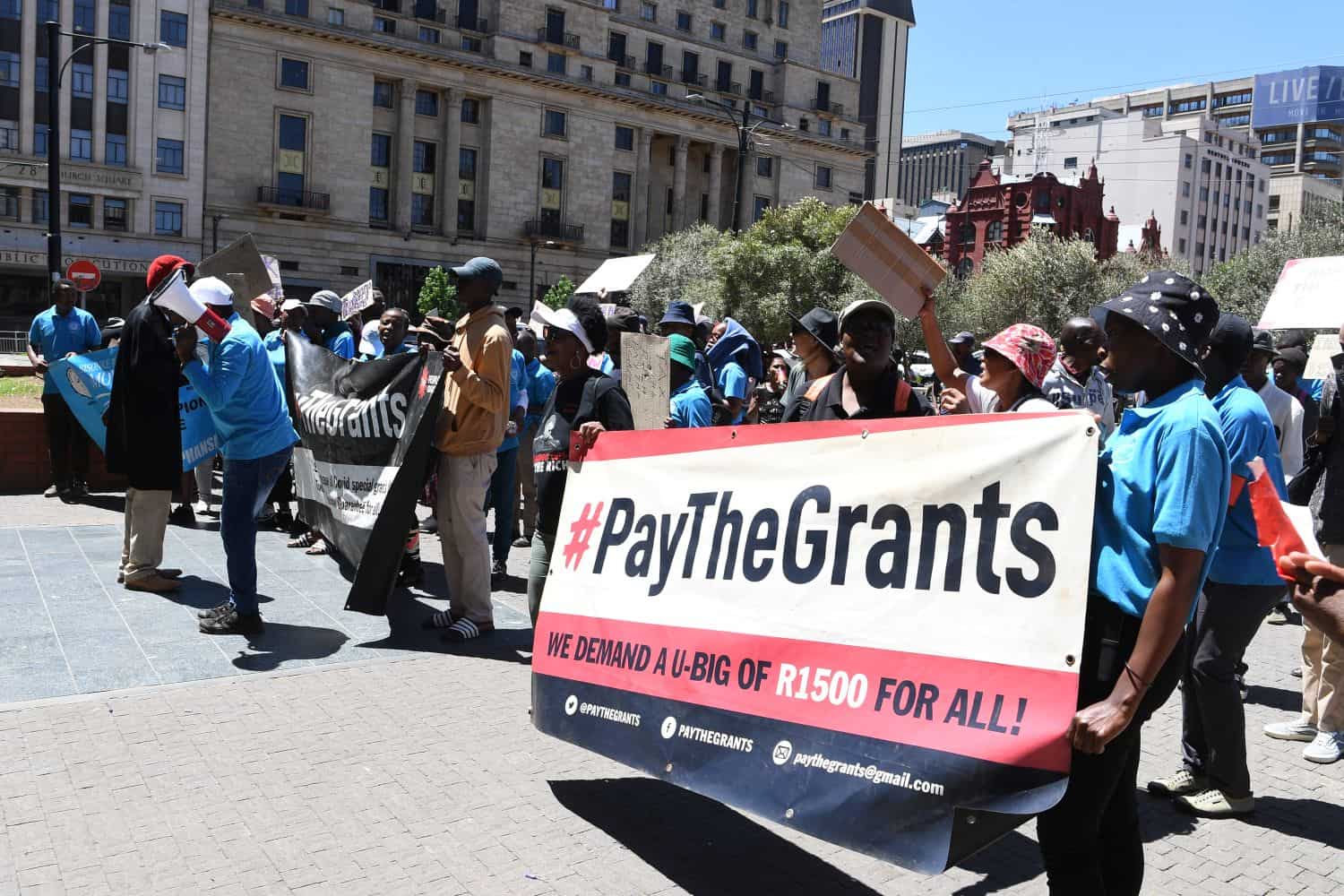
Finance Minister Enoch Godongwana has argued that despite the National Treasury’s desire to widen the net of social assistance as much as possible, it “simply cannot afford to do more.”
Visit afnews.co.za for more information.
This counters the Institute for Economic Justice’s (IEJ) argument that the government can and should do more regarding the threshold value and the grant’s value.
The finance minister, Social Development minister and the South African Social Security Agency (Sassa) appeared before the Supreme Court of Appeal on Tuesday to appeal a judgment of the Gauteng High Court in January 2025 that some of the Sassa regulations limit access to the R370 social relief of distress (SRD) grant, and are therefore unconstitutional and invalid.
The focus is on the online applications, which the IEJ argues restrict the poor from applying for the grant, and the definition of “income”, which it argues is too broad because it could include financial support received through other means.
The High Court agreed, declaring that the “income” in the regulation means money received on a regular basis from formal or informal employment, business activities or investments.
“It is declared that the words ‘financial support’ in Regulation 1 means money received on a regular basis which benefits the recipient, that does not constitute income, and which the recipient has a legal right to receive,” reads the judgment.
‘Misconception’
Advocate Gilbert Marcus, for the finance minister argued that the IEJ’s argument that the government can do more to reach more beneficiaries by increasing taxes or borrowing more money is based on “a misconception of both the nature and enforcement of socio-economic rights and the separation of powers.”
“The attack on the various regulations and its acceptance by the High Court must be approached in the context of the extraordinary complexities of the competing demands on the state’s resources,” argued Marcus.
“The High Court dismissed concerns in this regard without a proper evaluation of the evidence and without a proper appreciation of the limits of judicial intervention in complex matters of budgeting and the need to balance a multitude of competing claims.”
He argued that the High Court weighed in on the national budgeting process, ignoring the institutionally equipped body to decide how public revenue should be spent more effectively.
Poverty
Advocate Marcus further argued that evidence from the Treasury established a concerted effort to address poverty.
“Treasury is acutely conscious of extreme levels of poverty faced by too many South Africans. And it has an appreciation which lies, as they put it, at the root of much of its approach to the budget as a whole,” argued Marcus.
This, he said, is evident in the government’s expenditure on the social wage. Between 2014 and 2027, South Africa will have spent between 55% and 61% of its budget on it. This includes social security, education, health and housing.
“And as is explained, government can only expend money it extracts through taxation. Borrowing money is nothing more than deferred taxation,” argued Marcus.
“And the demands of the state concern virtually every facet of society, including obligations flowing from the socioeconomic rights in the constitution, access to adequate housing, access to health care services, sufficient food and water. The list literally goes on and on. And all this in the context of a relatively small tax base, with tax evasion and non-compliance.
“Treasury says that further or continued expenditure on the SRD grant, by definition, must come at the expense of some other expenditure.”
Marcus highlighted Treasury’s long-term plan to promote economic growth and create jobs, a more sustainable solution.
Grants affordability
The IEJ has argued that the grant amounts have not been progressive either, to keep up with inflation. It argues that the grant’s value today is lower than it was in 2020.
However, Marcus said the notion that the government can afford to do more by raising taxes or borrowing is “artificial and unsustainable”.
“That argument simply ignores the evidence which establishes in the supplementary affidavit from Treasury that when the R20 increase was mandated, the country’s financial position had deteriorated further. The increase meant that the state had to cut other expenditure to give at least some further relief,” argued Marcus.
Marcus said the relief sought by the IEJ would require additional expenditure between R93 billion and R139 billion.
This in addition to the government’s concession that around 18 million people may be eligible to receive the R370 grant, while it can only budget for around 10 million.
‘Grants are all the same’
Further, it is the IEJ’s argument that all grants are the same and should be treated the same with regard to the threshold value and the grant amount; Marcus said this argument was incorrect.
“The SRD grant was introduced as a temporary measure under the Disaster Management Act, which by definition was intended to have a limited life only.
“Under the Disaster Management Act, there are specific periods for which disasters can be declared, and measures taken pursuant to a disaster have the lifespan of the disaster alone.
“SRD grants are legislatively treated differently from the other grants. The Act, in section 1, defines ‘social grant’ and ‘social relief from distress’ separately.
“The definition of social grant does not include social relief from distress, and whereas the social grants as defined are prescribed in Sections 6 to 12 of the Act, social relief from distress is regulated by Section 13,
which leaves it to the Minister to prescribe by regulation.”
Online applications
The minister of Social Development and Sassa argued against the attack on the online application process, saying it was the most successful process to facilitate the SRD grants.
They argued that the SRD grant was temporary, as a recipient’s economic circumstances could change at any moment. Hence, the government requires a monthly verification process to ensure the grants go to qualifying recipients.
The online application and monthly verification process is the only effective way to ensure the grant reaches the right recipients, they argued.
Remedy
Marcus said, although the finance minister stands by all his arguments, should the IEJ succeed, four months would not be sufficient to implement the changes.
“The court knows more than enough to understand the complexity of the issue. The order of the High Court is extraordinarily prescriptive, and if that order is to stand, there will be questions of compliance thereafter.”